


48.5% of Adults Suffer from Sleep Disturbances, Technology Helps Overcome the National Insomnia Dilemma
Sleep is the cornerstone of the physical and mental health of the population, and insomnia is gradually evolving into a public health challenge affecting the brain health of the entire population. According to data from the 2025 China Sleep Health Survey Report, 48.5% of adults in China suffer from sleep disturbances. The incidence of sleep problems continues to rise with age, and insomnia has become a widespread issue threatening the brain health of the entire population. With the continuous popularization of the concept of proactive health, sleep disorders-which were previously overlooked-are giving rise to huge new demands in the medical and health sectors. Consequently, sleep health management is ushering in a period of rapid development.
The surge in clinical demand is directly reflected in the medical service sector. The latest statistics for 2026 show that the volume of visits to sleep clinics in top tertiary hospitals across the country increased by nearly 30% year-on-year, and the total annual volume of sleep clinic services nationwide grew by 39%. Sleep disorder interventions are accelerating their integration into standardized and normalized medical intervention systems. The policy level has also sent clear signals. In July this year, the National Health Commission issued the 15th Five-Year Plan for National Health, establishing the core direction of "optimizing medical services with a health-centered approach." It explicitly encourages secondary and above medical institutions to open specialty clinics for sleep, weight management, etc., elevating sleep health to a new height of public health services.
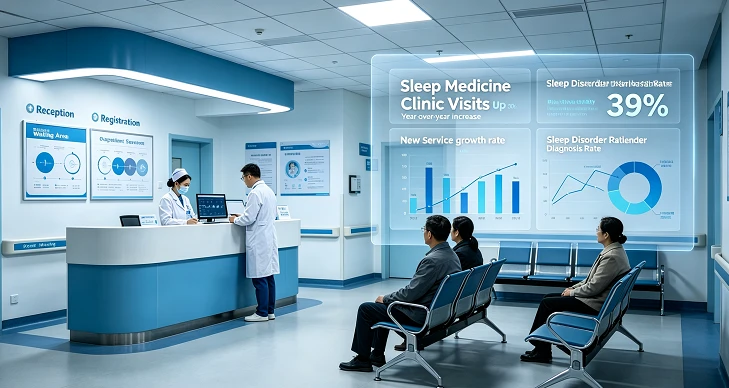
Driven by both policy guidance and market demand, the construction of sleep specialty departments and sleep health management centers in various hospitals is accelerating. However, in reality, sleep services still face pain points: traditional sleep aids mostly rely on drug interventions, which carry the risk of dependence with long-term use; a large number of sleep aids on the market can only provide short-term assistance and find it difficult to repair disrupted sleep rhythms from the physiological root. The industry urgently needs safe, non-invasive, and standardizable non-pharmacological intervention solutions. Consequently, functional medical sleep intervention devices are ushering in broad application space, gradually entering hospital departments and various health management institutions to help overcome the national sleep dilemma.
Research results published in the domestic authoritative journal Chinese Journal of Contemporary Neurology and Neurosurgery confirm that pulsed magnetic therapy technology is an ideal non-drug treatment for primary insomnia. This technology simulates the brainwave patterns of natural human sleep. By generating induced currents in the brain through pulsed magnetic fields, it regulates sleep-related nervous and hormonal systems in multiple dimensions, reduces excessive excitability of the cerebral cortex, and alleviates pre-sleep anxiety. Simultaneously, it improves cerebral microcirculation, regulates the balance of key neurotransmitters such as serotonin, gradually dissipates the hyperarousal state of the brain in insomniacs, proactively guides the "sleep-wake" rhythm back to a steady state, and helps the human body achieve a healthy sleep pattern of "natural sleep, deep sleep, and regular awakening."
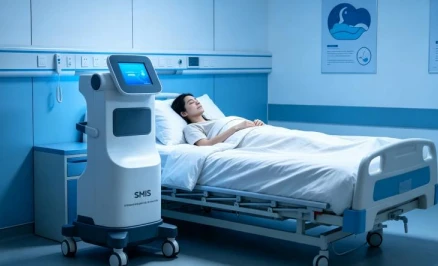
Compared with traditional sleep aid models, pulsed magnetic sleep therapy is a physical intervention method that boasts outstanding advantages of being intelligent, fast, and precise. It does not aim merely at extending sleep duration but repairs damaged sleep mechanisms from the physiological root, rebuilding the body's own ability to sleep, avoiding the side effects and addiction risks associated with drugs. It is adaptable to various sleep disorder scenarios, such as stress-induced insomnia in young and middle-aged people and light sleep/early awakening in the elderly, covering a wider service population.
For sleep health management centers, pulsed magnetic sleep therapy equipment serves as a hard-core carrier for enhancing service capabilities. On the one hand, the standardized operation process of the equipment allows it to be quickly integrated into the entire process of sleep screening, assessment, intervention, and follow-up. This lowers the threshold for institutions to carry out professional sleep interventions and fills the gap in the non-drug treatment sector. On the other hand, relying on technically proven medical solutions, it can help institutions build a differentiated and standardized sleep health service system. It can not only undertake the extended management of hospital outpatient clinics but also carry out sleep health maintenance for the general public, broadening the service boundaries and accumulating a stable client flow.

From passive disease treatment to proactive health management, sleep health management is undergoing a model upgrade. Using non-drug physical intervention as a starting point, pulsed magnetic sleep therapy equipment opens up a channel for the transformation of clinical technology into mass health services, injecting new momentum into sleep health management centers. In the future, with the continuous implementation and promotion of the technology, it will further help improve the full-cycle sleep health service network and contribute technological strength to safeguarding the brain health of the population.