


World Health Day|Sharing Technological Innovation, Working Together to Promote National Health

Every year, April 7th is World Health Day. The theme for China's World Health Day campaign this year is "Sharing Technological Innovation, Working Together to Promote Health." It explicitly calls for widespread promotion of cases where scientific and technological innovations in health have been transformed and applied, demonstrating how technological innovation enhances the efficiency and quality of medical and health work. This aims to fully showcase the sense of professional fulfillment for medical workers and the sense of health and well-being for the people.
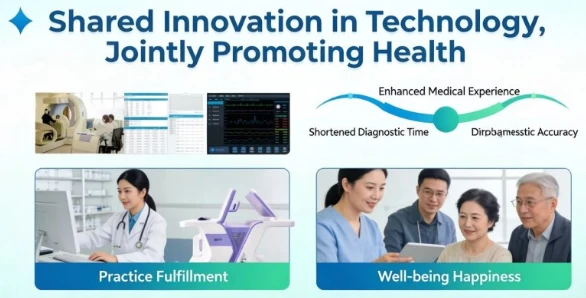
Health is the foundation of people's well-being, and technology is the wing of health. In recent years, China has seen continuous breakthroughs in scientific and technological innovation within the health sector. Batches of innovative and practical technological achievements have taken root, comprehensively reshaping the health service model-from disease prevention and precise screening to scientific treatment, rehabilitation, and care. This makes quality health services more accessible, safeguards national health with the power of technology, and vividly embodies the core concept of "Sharing Technological Innovation, Working Together to Promote Health."
In the field of health prevention and early screening, the widespread application of the HRA Human Electrical Impedance Evaluation and Analysis System has made the health concept of "early detection, early intervention" a tangible reality, fundamentally changing the inefficiency and poor experience associated with traditional health monitoring. As a non-invasive functional medical testing device, HRA requires only 5 minutes and 38 seconds to rapidly detect over 220 indicators across 9 major human systems. It intuitively presents physical health conditions through 3D image reconstruction, accurately identifies early risks of diseases such as hypertension, arteriosclerosis, and tumors, and provides a scientific basis for health management.
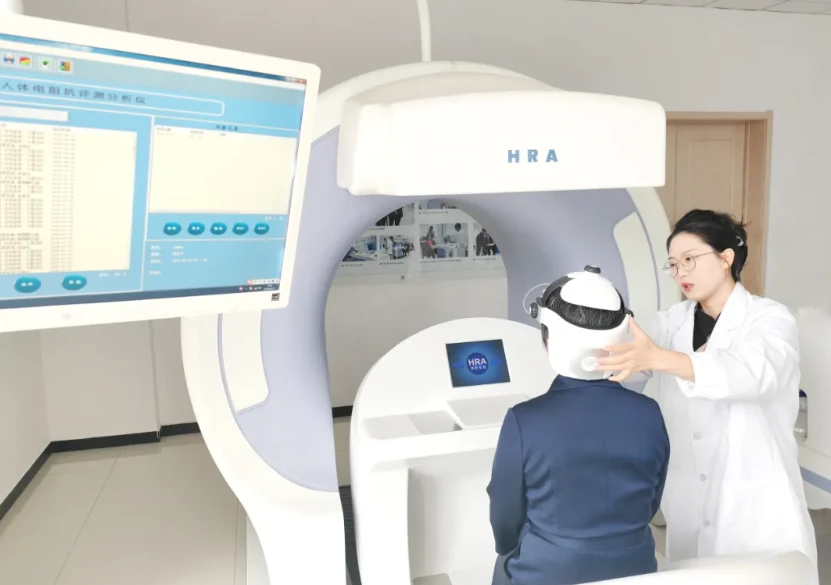
Whether for health screenings of corporate employees or routine health monitoring for the general public, HRA can efficiently adapt. It not only improves the efficiency of health monitoring but also enhances public awareness of health management through a convenient testing experience, truly realizing the health concept of "preventive treatment." This highly aligns with the international trend of achieving preventive health management through health risk assessment.
In the field of physical therapy and chronic disease management, PMR Pulsed Magnetic Microcirculation Therapy technology, with its advantages of being non-invasive and painless, has provided the public with green and efficient health solutions, becoming a significant example of technology empowering wellness. This technology applies the principle of biomimetic pulsed magnetic resonance, combined with extremely low-frequency electromagnetic induction technology. It transmits extremely low-frequency electromagnetic signals to the human body through multiple sets of pulsed emission source arrays, "recharging" the body at the cellular level. By regulating cell membrane potential, redistributing surface charges on red blood cells, improving vasodilation, and repairing human microcirculation, it enhances the blood's ability to deliver oxygen and nutrients, regulates endocrine function, and accelerates the metabolism of waste products in the body.

PMR Pulsed Magnetic Microcirculation Therapy can automatically set personalized treatment plans for different populations, achieving auxiliary treatment for common chronic diseases. By improving microcirculation, it alleviates pain, reduces fatigue, and improves suboptimal health states. Its magnetic field intensity is less than one hundred-thousandth of that of a mobile phone, making it highly safe. It has been selected for the National Health Technology Promotion Project Reserve Library and is extending from hospitals to communities and homes, allowing more people to enjoy the health benefits brought by technology.
Faced with the cognitive health challenges brought by an aging population, technological innovation also provides precise solutions. The ADDS Cognitive Dysfunction Screening and ADTS Memory Impairment Training System establishes a full closed-loop management model of "screening - intervention - rehabilitation," building a solid defense line for the cognitive health of the elderly.

The ADDS Cognitive Dysfunction Screening System breaks the subjective limitations of traditional screening by adopting a three-dimensional diagnostic system of "Scale Assessment + EEG Analysis + AI Modeling." Through intelligent human-computer interaction, it screens for risks of senile dementia and Alzheimer's disease. Its clinical diagnostic consistency rate is as high as 95.65%, offering strong objectivity, high accuracy, and non-invasiveness. It significantly improves the testing experience and screening compliance among the elderly population. It meets the precise diagnostic needs of top-tier hospitals and is also suitable for large-scale initial screening in primary care institutions, effectively promoting the standardization and normalization of cognitive impairment screening.
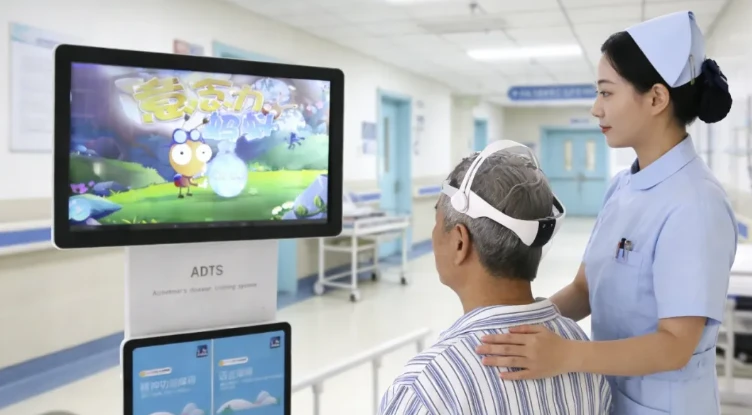
The ADTS Memory Impairment Training System, relying on core brain-computer interface technology, combines artificial intelligence with rehabilitation training. It allows patients to control the progress of rehabilitation games with their thoughts, activating brain cells through engaging interactions, enhancing the complexity of brain neural activity, and effectively preventing further memory decline. It provides a scientific and convenient rehabilitation pathway for people with mild cognitive impairment and early-stage Alzheimer's disease, filling a technological gap in related fields domestically.
From the rapid screening of HRA to the non-invasive therapy of PMR, from the precise early warning of ADDS to the intelligent rehabilitation of ADTS, the transformation and application of these health technology achievements have not only improved the efficiency and quality of medical and health work. More importantly, they have liberated medical workers from tedious basic tasks, allowing them to devote more energy to precise diagnosis, treatment, and health services. Simultaneously, they enable the public to access high-quality, efficient, and convenient health services right at their doorstep, tangibly enhancing their sense of fulfillment, happiness, and security.
"Sharing Technological Innovation, Working Together to Promote Health" is not just a promotional slogan; it is a commitment to action. It entails continuously promoting scientific and technological innovation in health, accelerating the transformation of achievements, and allowing more advanced technologies to benefit all people. It also involves guiding the whole society to embrace scientific health concepts, proactively adopt health technologies, and foster a positive atmosphere where "everyone cares about health, and everyone participates in health."