



Bringing Technology to County-Level Communities in Northwest China: HSAP Devices Advance the "Prevention–Screening–Diagnosis–Treatment–Wellness" Closed Loop and Unlock New Scenarios for Grassroots TCM Services
On August 29, the 2026 Academic Conference of the Gansu Provincial Working Committee, held under the Project for the Inheritance and High-Quality Development of County-Level Traditional Chinese Medicine (TCM) and hosted by the Boao County-Level Medical Development Research Center of Hainan, was grandly convened in Wuwei, Gansu Province. Huisianpu presented a range of self-developed, appropriate-technology devices for functional medicine-based health management, empowering grassroots healthcare with modern technology and supporting the high-quality development of county-level TCM.

Using the "County-Level TCM Inheritance and High-Quality Development" initiative as a key vehicle, the conference established the Gansu Provincial Academic Working Committee for the project. It focused on the development of Gansu's distinctive TCM specialty disciplines and on implementation pathways for TCM appropriate-technology promotion centers, actively explored new models for building TCM medical communities, and drew up a blueprint for improving the quality and expanding the capacity of local TCM services. The conference was attended by representatives from 106 member institutions of the Medical Alliance of Gansu Provincial Hospital of Traditional Chinese Medicine, together with more than 300 experts and scholars from within and beyond the province.
Zhao Yongqiang, Vice President of Gansu Provincial Hospital of Traditional Chinese Medicine, delivered the Work Report of the Working Committee for the Gansu Provincial TCM Inheritance and High-Quality Development Project. Also in attendance and delivering keynote reports were Professor Xia Meng, founding director of the Department of Clinical Nutrition at Beijing Anzhen Hospital and Chief Expert of the Nutrition Medicine Center of PKU Healthcare Group; Professor Gao Xiangfu, President of Zhejiang Provincial Hospital of Traditional Chinese Medicine; and Professor Liu Qingquan of Beijing Hospital of Traditional Chinese Medicine, Capital Medical University.

In her keynote report, The Clinical Application of the Medicine–Food Homology Principle in TCM, Professor Xia Meng noted that the development of TCM requires building a full-chain health service system covering "prevention, treatment, rehabilitation, and management," and improving the working mechanism for early screening, early diagnosis, and early treatment. As the front-line gateway of health services, early health screening is a key lever for implementing disease prevention and control and for shifting health management further upstream - a concept that aligns closely with Huisianpu's long-standing commitment to deepening grassroots health management.

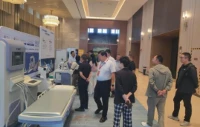
A dedicated exhibition and hands-on experience zone was set up at the conference, where Huisianpu's full matrix of functional medicine health management devices was on display, drawing many attending leaders and industry experts to stop by for a closer look. They examined each device's technical principles, clinical application scenarios, and value for grassroots implementation, and tried out devices such as the HRA Health Risk Appraisal system and the ADTS Memory Impairment Training System, experiencing at first hand the innovative changes that modern functional medicine equipment is bringing to grassroots TCM services.

Powered by core technologies including artificial intelligence, brain–computer interfaces, bioelectrical impedance, and extremely low-frequency pulsed magnetic fields, Huisianpu has built a full-chain, closed-loop health service model of "prevention, screening, diagnosis, treatment, and wellness," which won broad recognition and strong resonance among experts on site. The entire device matrix closely echoes the core TCM philosophy of "treating disease before it arises," organically integrating the traditional wisdom of Chinese health preservation with modern functional medicine technology. Covering the whole chain of health risk screening, functional assessment, and rehabilitation intervention, it provides grassroots TCM institutions - such as county-level TCM halls and TCM medical communities - with a complete, integrated closed-loop toolkit for "screening–assessment–intervention–follow-up," filling the remaining gaps in the grassroots health management service chain.

Within this matrix, the combined solution of HRA Health Risk Appraisal, EIS Red Blood Cell Imaging, and PMR Pulsed Magnetic Microcirculation Therapy establishes a closed-loop management approach for sub-health conditions and chronic diseases, helping grassroots institutions carry out chronic disease risk screening and functional rehabilitation interventions. Meanwhile, the integrated package of ADDS Cognitive Screening, ADTS Memory Training, and SMIS Sleep Intervention builds a smart closed loop for cognitive health management, expanding the specialized service capabilities of grassroots TCM institutions in cognitive decline and sleep disorders, and enriching the service scenarios of TCM specialty disciplines.

Counties are the main arena for the inheritance, innovation, and development of TCM. Looking ahead, Huisianpu will continue to capitalize on its strengths in independent technological innovation, take deep root in the field of grassroots TCM services, and deliver intelligent, convenient, and readily deployable appropriate-technology device solutions. It will keep closing the capacity gaps in county-level TCM services, broaden the scenarios for distinctive TCM services, and consolidate the foundation of TCM specialty development. At the same time, it will work with partners across the industry to explore new pathways for the modernization of county-level TCM, contributing technological strength to the inheritance and innovation of TCM culture and to the high-quality development of the TCM cause at the county level.