

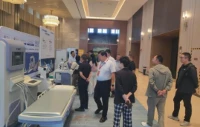


A New Benchmark for High-End Residential Developments: HSAP Health Management Equipment Pioneers a New Model for Community Wellness and Care
Technology Empowers Healthy Communities, Precision Management Leads to Quality Living
Driven by both consumption upgrades and heightened health awareness, homeowners in high-end residential developments have shifted their health management focus from "disease treatment" to comprehensive lifecycle wellness maintenance. Data reveals that over 80% of high-net-worth individuals prioritize "community health amenities" as a core consideration when purchasing property.
To build differentiated community competitiveness, introducing advanced functional medicine health management equipment and establishing professional health management centers are becoming the core strategies for premium community wellness services.
I: Health Management Centers: The New Calling Card for Premium Developments
Traditional luxury properties competed on location, landscaping, and finishing standards, while the new generation of high-end residences focuses on health services and quality of life. Through a closed-loop service model of "screening-assessment-intervention-follow-up," health management centers provide residents with personalized health protection while enhancing the community's brand premium.
Industry research indicates that luxury developments equipped with professional health management centers see over a 35% increase in resident satisfaction and a 28% rise in repeat recommendation rates. This establishes a virtuous cycle for developers: service enhancement → reputation building → asset preservation.
II. HSAP Equipment Configuration: A Scientifically Structured Three-Tier System
Based on residents' health priority needs and complementary equipment functions, high-end community health management centers can adopt a three-tier configuration architecture: "Basic Screening + Specialized Management + Rehabilitation Intervention."
01 Basic Screening Zone
Core equipment includes:
- HRA Bioelectrical Impedance Analysis System: Assesses 220 indicators across 9 major systems
- ADDS Cognitive Impairment Screening System: Enables early cognitive risk detection
- EIS Digital Microscope: Facilitates rapid red blood cell function testing
This foundational screening matrix meets over 90% of residents' routine health assessment needs, with a daily testing capacity of 50 individuals.
The HRA Health Risk Assessment System employs bioelectrical impedance technology to complete a full-body scan in 5 minutes, boosting efficiency by 80% compared to traditional physicals. It achieves over 96% clinical compliance and requires no fasting, eliminating cumbersome procedures like blood draws and urine retention. Resident acceptance exceeds 92%.
02 Specialized Management Zone
The MSA Multimodal Mental Stress Analyzer and ADTS Memory Impairment Training Device form a combined solution specifically addressing psychological issues in high-stress populations and cognitive decline risks among the elderly, filling gaps in community mental health services.
The MSA Multimodal Stress Analyzer overcomes the limitations of traditional single physiological indicators or subjective scales. It constructs a stress assessment system across three levels-"physiological, psychological, and neurological"-enabling the identification of potential risks for mental disorders such as depression and anxiety 6 to 12 months before clinical symptoms appear.
03 Rehabilitation Therapy Zone
The rehabilitation intervention system comprises the PMR Pulsed Magnetic Microcirculation Therapy System, ERS Erythrocyte Aggregation Rehabilitation System, and SMIS Pulsed Magnetic Sleep Therapy Device, extending services from "risk early warning" to "proactive intervention."
SMIS Pulsed Magnetic Sleep Therapy employs variable-frequency ultra-low-frequency electromagnetic fields to mimic normal sleep brainwave rhythms, avoiding the addictive properties and side effects of sleeping pills. It demonstrates an 82% improvement rate for chronic insomnia, making it particularly suitable for middle-aged and elderly individuals suffering from long-term sleep disturbances.
III. Operational Service Model: Building a Full-Cycle Health Management System
Health Management Service Process
Establishing a "Full-Cycle Digital Health Management" System:
Smart Appointments: Schedule testing slots via community apps or mini-programs; the system automatically allocates equipment resources.
Precision Testing: Adopts a "basic package + specialized add-ons" model.
Smart Assessment: Generates visual reports.
Customized Intervention: Develops "3+1" intervention plans for high-risk individuals. Dynamic Tracking: Establishes quarterly follow-up mechanisms.
Value-Added Service Expansion
Health Membership System: Offers three tiers-Silver Card (4 annual basic screenings), Gold Card (includes 12 specialized assessments), and Platinum Card (adds 10 rehabilitation treatments).
Themed Health Events: Hosts monthly "Health Open Days" and quarterly "Family Health Challenges." Medical Resource Integration: Collaborates with regional top-tier hospitals to establish green channels for medical care.
IV. Success Stories: Application Practices Across Diverse Scenarios
HSAP health management devices have been successfully deployed in multiple scenarios, demonstrating their broad adaptability:
In the "Healthcare + Real Estate" model, China Railway Renzhi Health City utilizes the HRA Health Risk Assessment System and PMR Microcirculation Repair System to establish a closed-loop health management model encompassing health screening, outcome evaluation, and intervention rehabilitation.
Yunnan Jindi Group adopted HSAP's HRA equipment to establish a "4P" medical philosophy-predictive, preventive, personalized, and participatory- delivering continuous health services across the entire life cycle.
In the "Health + Tourism" model, Tianjin Beierbao Village introduced Huisi'anpu's functional medicine health screening and intervention equipment to provide free health management services for villagers and tourists. This enriches the essence of rural tourism and elevates local tourism quality.
This model not only enhances villagers' health literacy and enables their health management but also drives the shift from tourism to extended stays, promoting the sustainable development of the rural economy.
V. Value Proposition and Expected Benefits
01 Core Value
For homeowners, access to a comprehensive health service chain-" prevention, detection, intervention, and rehabilitation"-right at their doorstep. Health risk screening coverage rises from under 30% in traditional communities to over 90%.
For communities, establishing a distinctive "Health Management Center" IP becomes a core selling point for property marketing, driving a 10%-15% premium potential. At the societal level, this initiative concretely advances the "Healthy China" strategy, providing a replicable model for premium community health infrastructure.
02 Profit Projection
Based on 500 homeowners (80% occupancy rate), with 30% opting for Gold Membership and 15% for Platinum Membership, annual service revenue is projected at approximately ¥800,000. Equipment investment costs can be recouped within 2-3 years.
Following the launch of the Health Management Center, community resident satisfaction is expected to increase by 40%, while negative feedback will decrease by 50%. This will establish the "Healthy Community" brand identity.
Conclusion
Guided by the Healthy China strategy, the integration of health management with high-end communities has become an irreversible trend. The introduction of the full suite of HSAP functional medicine health management equipment not only fulfills the intrinsic demand for healthy living among high-end demographics but also provides developers with a pathway to transition from "selling homes" to "selling lifestyles."
This innovative model seamlessly combines health technology with community living, redefining the value proposition of premium residential spaces and injecting fresh momentum into the sustainable development of the real estate industry.