




World Alzheimer's Disease Day 丨 Action against Dementia
September 21, 2024 is the 31st World Alzheimer's Day. This September, World Alzheimer's Disease Month activities will be centered on the theme of "Action against dementia, action against Alzheimer's disease".
Alzheimer's Disease (AD) is a disease that causes gradual deterioration of cognitive function and is the most common type of dementia in old age. Data show that there are about 17 million cases of AD and other dementias in China, of which 60-70% are AD patients, and the prevalence and mortality rate of women is about twice that of men. screening for AD is crucial for early intervention of the disease.
Early detection, diagnosis and intervention
Huali Wang (Professor and Doctoral Director of the Sixth Hospital of Peking University, Director of the Memory Disorder Diagnosis and Research Center of the Institute of Mental Health of Peking University)
Patients with Alzheimer's disease make up the majority of patients seen in our Psychiatric Memory Center. Due to the insidious onset of cognitive impairment, it is easy to overlook it initially. Realistically, early screening for Alzheimer's disease is critical. Early symptoms such as memory loss, disorientation, disorganization, easy to lose temper, and reduced language and living skills should be taken seriously when they occur in the elderly. If these problems are detected early, interventions such as medication, psychology, activity participation, and cognitive training can effectively slow down the progression of symptoms, whereas the further the disease progresses, the less effective the interventions will be.
At present, the awareness of Alzheimer's disease in society as a whole has yet to be raised. In the course of diagnosis and treatment, we often encounter family members who are hesitant or even unwilling to accept that their family members are suffering from the disease. There are two main reasons for this: first, society at large does not know enough about the disease and is often unaware of the initial symptoms; second, people are still apprehensive about Alzheimer's disease and many family members have a sense of shame.

As medical professionals, we actively educate the community about the early symptoms of Alzheimer's disease, teach people to correctly recognize and identify the first signs of the disease, and provide patients with guidance on drug and non-drug early intervention treatments.
For example, in 2021, the Sixth Hospital of Peking University launched the "National Geriatric Mental Health Initiative" in the hope of laying a better foundation for long-term health management through community mental health services for the elderly.
On the other hand, we encourage patients and their families to face the disease bravely and actively cooperate with the treatment both psychologically and operationally. In order to help patients and their families obtain more support resources, my team has started the "Patient Association" for more than 20 years. "For patients, if they can actively participate in social activities and carry out cognitive training such as brain exercises in the company of their family members, they will be able to maintain a good mental state and the burden of family care will be much smaller.
Development of a friendly community for older persons with cognitive impairment
Changgen Li (Director, Chengdu Elderly Service Guidance Center, Sichuan Province)
In order to actively explore the construction of age-friendly communities and do a good job of prevention and treatment related to cognitive disorders in old age, in recent years, Chengdu City, Sichuan Province, in accordance with the idea of government-led, socially-run and professionally-serviced, has been promoting the pilot work of age-friendly communities for cognitive disorders in old age in 26 communities across the city.
Specifically, we are moving forward in the following four areas:
First, to enhance a cognitively friendly atmosphere in the community. Through a variety of online and offline forms, we have conducted more than 530 health campaigns in the city, covering 114,000 people, creating a friendly environment in which the whole community cares about and pays attention to older persons with cognitive disabilities, and effectively reducing the sense of shame and fear among older persons.
Second, we have established a sound community-based friendly support network for the elderly with cognitive disabilities. We have developed project volunteers and fostered the development of 37 teams of elderly cognitive care volunteers with a total of more than 1,800 people; we have actively linked up more than 30 hospitals, nursing institutions and other organizations to form an alliance of elderly cognitive care resources and support, and we have mobilized more than 390 community-based enterprises and public institutions to join the Elderly Cognitive Impairment Friendly Units.
Thirdly, we are promoting the refinement of elderly services. Taking the construction of cognitive impairment-friendly communities for the elderly as an opportunity, we have successively built scenario gardens with embedded cognitive special care facilities and cognitive impairment-friendly facilities, and guided 30 elderly care facilities to create special areas for cognitive impairment care, with more than 3,000 beds for cognitive impairment care, so that elderly care services have become more refined.
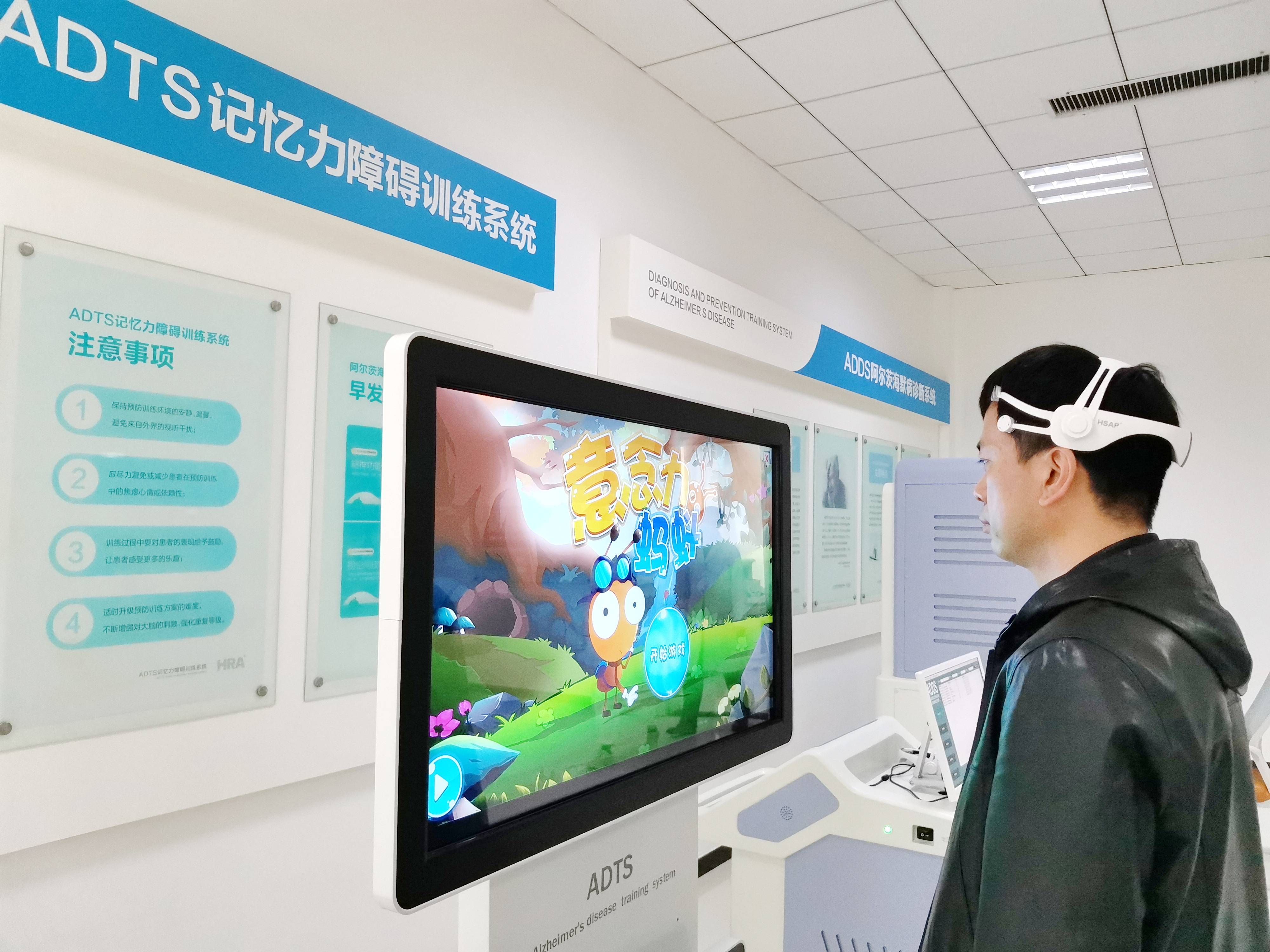
ADTS Memory Disorder Training - Early Intervention for Alzheimer's Disease
Fourth, accelerating the construction of an age-friendly society. Taking the construction of cognitive impairment-friendly communities for the elderly as a breakthrough, the communities have fully linked all kinds of social resources, continuously refined the service radius and enhanced the service temperature, and successfully promoted three communities to be awarded national model age-friendly communities. At present, the city has created 26 cognitive impairment-friendly communities, constructed 52 cognitive impairment service positions (26 cognitive impairment support centers and 26 cognitive friendly spaces), covered 168,000 people with health education, completed early screening for cognitive impairment for more than 52,000 seniors, and is carrying out early intervention for cognitive impairment for more than 3,000 seniors at risk.
Memory Keeping and Public Service Empowerment
Lijie Cheng (Secretary General, Shanghai Taipo Blue Public Welfare Foundation)
In January 2021, the first flagship project of Shanghai TaiBaoLan Charity Foundation, "Guardian of Memory, Ten Thousand Hundred and Ten", set sail. 3 years ago, focusing on cognitive disorders, adhering to the family empowerment, team empowerment, technological empowerment and environmental empowerment, and taking screening as the first step, professional training, scenario building and industry promotion as the gripping hand, the project's influence on public welfare has gradually appeared. The program's public service impact has gradually emerged.
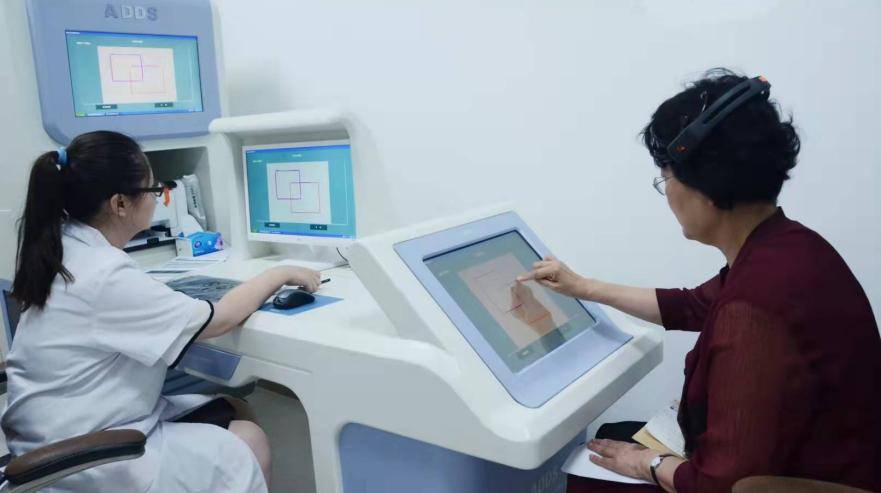
ADDS Cognitive Dysfunction Screening
We released Shanghai's first "Cognitive Impairment Risk Self-Assessment Report for Elderly in the Community" and "White Paper on the Community Needs of Families with Cognitive Impairment" to provide data support for the government to land cognitive impairment services; we collaborated with the Shanghai Mental Health Center in developing a VR popularization video of cognitive impairment, creating an online brain health meeting room, regularly launching live courses on chanting, cooking, etc., and providing intervention programs designed by professional therapists and salon sharing activities for family caregivers in the community. It also provides intervention programs designed by professional therapists and salon sharing activities for family caregivers in the community. Relying on the Shanghai Elderly Service Industry Association, we carry out 10 thematic activities on caring for cognitive disorders each year, and have organized the "Cognitive Disorders Care Summit Forum" for four consecutive years.
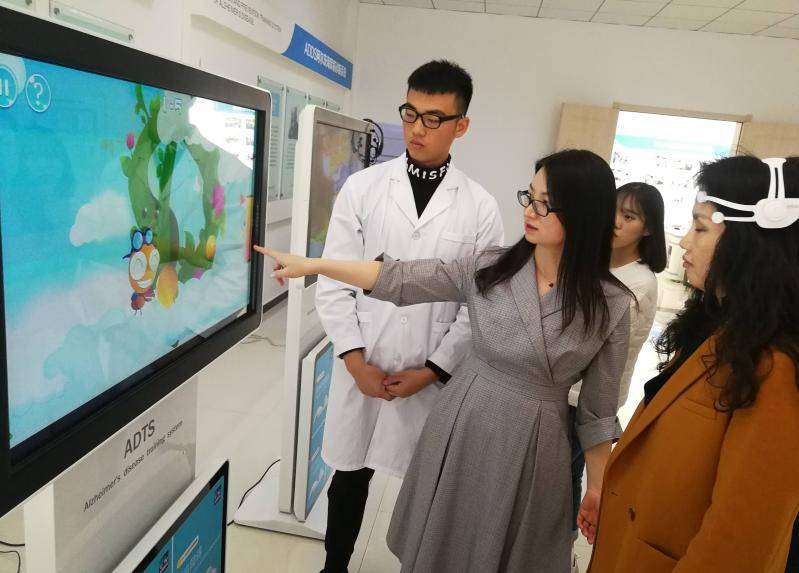
ADTS Memory Disorder Training
The Foundation has built a one-stop brain health public welfare service station at the doorstep; built a brain health public welfare "brick-and-mortar" store integrating brain health cognitive popularization, screening assessment and therapy, and brain activation interactive experience, etc., and provided a series of public welfare support services such as intelligent early screening, diagnostic assessment, assisting in archiving, popularization of scientific knowledge, salon activities, and volunteer services to the elderly in the community; joined hands with the Shanghai Federation of Trade Unions to send brain health care services to 4,500 old laborers. It provides intelligent early screening, diagnostic assessment, filing assistance, popular science knowledge, salon activities, volunteer services and other series of public welfare support for the elderly in the community, and has landed in a number of streets in Shanghai.
In addition, the Foundation also donated to the civil affairs departments of Nanjing, Qingdao, Xiamen and Dali to build "Cognitive Memory Homes", creating seven cognitive care scenarios, including a nostalgic reading area, a life experience area and a music therapy area, in order to enhance the capacity of the community's elderly care services.
(Liping Ma, China Social News)