



In the ever - evolving landscape of healthcare technology, the capabilities of health analyzer machines have become a subject of great interest. As a supplier of advanced health analyzer machines, I often encounter questions about the extensive range of parameters these devices can measure. One such frequently asked question is whether a health analyzer machine can measure blood flow. This blog post aims to delve deep into this topic, exploring the science behind blood flow measurement, the functionality of health analyzer machines, and the practical implications for healthcare.
Understanding Blood Flow
Blood flow is a fundamental physiological process that ensures the delivery of oxygen, nutrients, and hormones to all cells in the body while removing waste products. It is regulated by a complex interplay of factors, including the heart's pumping action, the elasticity of blood vessels, and the viscosity of blood. Measuring blood flow provides crucial information about the cardiovascular system's health, helping to diagnose conditions such as arterial stenosis, heart failure, and peripheral vascular diseases.
There are several established methods for measuring blood flow. Doppler ultrasound is one of the most commonly used techniques. It works on the principle of the Doppler effect, where the frequency of sound waves reflected from moving blood cells changes. By analyzing these frequency shifts, healthcare providers can calculate the velocity and direction of blood flow in arteries and veins. Another method is magnetic resonance imaging (MRI) or computed tomography (CT) angiography, which can provide detailed images of blood vessels and estimate blood flow using specialized contrast agents.
The Functionality of Health Analyzer Machines
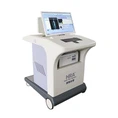
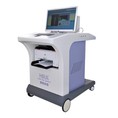
Our company offers a variety of health analyzer machines, including the Full Body Check - Up Machine and Full Body Checkup Machine, which are designed to provide comprehensive health assessments. These machines are equipped with state - of - the - art sensors and advanced algorithms that can measure a wide range of physiological parameters.
Most of our health analyzer machines are based on non - invasive technologies, which means they do not require any needles or incisions. They use bioelectrical impedance analysis (BIA) to measure the body's electrical resistance, which can be correlated with various body composition parameters such as fat mass, muscle mass, and body water content. Additionally, some of our high - end models are capable of measuring blood pressure, heart rate, and electrocardiogram (ECG) signals.
Can Health Analyzer Machines Measure Blood Flow?
The answer to whether a health analyzer machine can measure blood flow is both yes and no, depending on the specific type and model of the machine. While traditional health analyzer machines primarily focus on body composition and basic vital signs, our latest Health Risk Assessment Device incorporates advanced technology that allows for an indirect estimation of blood flow.
This device uses a combination of BIA and photoplethysmography (PPG). PPG is a simple and non - invasive optical technique that measures changes in blood volume in the microvascular bed. By analyzing the PPG signal, it is possible to obtain information about the pulse wave velocity (PWV), which is related to the stiffness of blood vessels and the speed of blood flow. Although this is not a direct measurement of blood flow in the same way as Doppler ultrasound or angiography, it can provide valuable insights into the cardiovascular health and the efficiency of blood circulation.


The advantages of using our health analyzer machine for an indirect blood flow estimation are numerous. Firstly, it is non - invasive, painless, and quick, making it suitable for routine health screenings. Patients do not need to undergo any uncomfortable procedures or wait for long periods for test results. Secondly, the device can be used in various settings, including clinics, hospitals, and even at home, providing convenient access to health information.
Practical Implications for Healthcare
The ability to estimate blood flow, even indirectly, has significant practical implications for healthcare. For healthcare providers, it can help in the early detection of cardiovascular diseases. By monitoring changes in PWV and other related parameters over time, doctors can identify patients at risk of developing conditions such as hypertension, atherosclerosis, and stroke. This allows for timely intervention and preventive measures, which can ultimately improve patient outcomes and reduce the burden on the healthcare system.
For patients, having access to information about their blood flow can empower them to take control of their health. They can make informed decisions about their lifestyle, such as adopting a healthier diet, increasing physical activity, and managing stress. Moreover, regular use of our health analyzer machine can provide patients with a sense of continuity in their healthcare journey, as they can track their progress and see the impact of their lifestyle changes on their cardiovascular health.
Contact for Procurement
If you are interested in our health analyzer machines, especially those with the ability to estimate blood flow, we encourage you to reach out to us for procurement and further discussion. Our team of experts is ready to provide you with detailed product information, technical support, and customized solutions to meet your specific needs. Whether you are a healthcare institution looking to upgrade your diagnostic equipment or an individual interested in home - based health monitoring, we have the right product for you.
References
- Guyton, A. C., & Hall, J. E. (2015). Textbook of Medical Physiology. Elsevier.
- Wang, X., & Liu, Y. (2018). Photoplethysmography and its application in clinical physiological measurement. Physiological Measurement, 39(9), 09TR01.
- O'Rourke, M. F., & Hashimoto, J. (2007). Pulse wave analysis: from research tool to clinical application. Hypertension Research, 30(6), 463 - 470.