


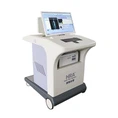

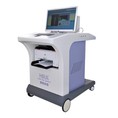
In the modern era, the significance of preventive healthcare has reached new heights. A Health Risk Appraisal System (HRAS) stands at the forefront of this preventive approach, leveraging data analysis to offer insights into an individual's health risks. As a prominent supplier of such systems, I've witnessed firsthand the transformative power of data - driven health risk assessment. In this blog, I'll delve into how a health risk appraisal system analyzes data to provide accurate and actionable health insights.
Data Sources for HRAS
The first step in the data - analysis process of an HRAS is gathering data from multiple sources. These sources can be broadly classified into two categories: patient - provided data and objective measurement data.


Patient - provided data includes information such as age, gender, family medical history, lifestyle factors (smoking, alcohol consumption, exercise habits), and self - reported symptoms. This data is typically collected through questionnaires that patients fill out when they first interact with the HRAS. Family medical history is particularly crucial as it can indicate genetic predispositions to certain diseases. For example, a family history of heart disease or diabetes can significantly increase an individual's risk of developing these conditions.
Objective measurement data, on the other hand, comes from various medical devices. Our company offers state - of - the - art Health Check - up Machine that can measure a wide range of physiological parameters. These machines can measure vital signs like blood pressure, heart rate, body temperature, and also conduct more in - depth tests such as blood glucose and cholesterol levels. In a hospital setting, our Full Body Scanner Machine in Hospital can provide detailed images of the internal organs, detecting potential abnormalities at an early stage.
Data Preprocessing
Once the data is collected, it undergoes preprocessing. This is a critical step as raw data can be noisy, incomplete, or inconsistent. The preprocessing stage involves several operations.
Firstly, missing values need to be handled. In patient - provided data, it's common for some questions to be left unanswered. There are different strategies to deal with missing values. One approach is to use statistical methods to impute the missing values based on the available data. For example, if a patient's age is missing, we can estimate it based on other factors such as their reported lifestyle and medical history.
Secondly, data normalization is performed. Different data sources may use different scales and units. For instance, blood pressure can be measured in mmHg, while cholesterol levels are in mg/dL. Normalization ensures that all data is on a comparable scale, which is essential for accurate analysis.
Outlier detection is another important part of preprocessing. Outliers are data points that deviate significantly from the norm. These can be due to measurement errors or genuine rare cases. Identifying and handling outliers appropriately is crucial to prevent them from skewing the analysis results.
Feature Selection and Extraction
After preprocessing, the next step is feature selection and extraction. In a large dataset, not all features are equally relevant for predicting health risks. Feature selection aims to identify the most important features that contribute to the prediction. This reduces the dimensionality of the data, making the analysis more efficient and accurate.
For example, in predicting the risk of cardiovascular disease, features such as blood pressure, cholesterol levels, and smoking status are likely to be highly relevant, while features like hair color or shoe size are clearly irrelevant. Machine learning algorithms can be used to rank features based on their importance.
Feature extraction, on the other hand, involves creating new features from the existing ones. For instance, instead of using raw blood pressure values, we can calculate the pulse pressure (the difference between systolic and diastolic blood pressure), which may be a better indicator of cardiovascular health.
Data Analysis Techniques
Once the features are selected and extracted, various data analysis techniques are applied to the data.
Statistical Analysis
Statistical analysis is used to summarize and describe the data. Descriptive statistics such as mean, median, and standard deviation are calculated to understand the central tendency and variability of the data. Inferential statistics are then used to make predictions and draw conclusions about the population based on the sample data. For example, we can use regression analysis to model the relationship between different risk factors and the likelihood of developing a disease.
Machine Learning
Machine learning algorithms play a crucial role in HRAS data analysis. Supervised learning algorithms are used when we have labeled data (i.e., data with known outcomes). For example, if we have a dataset of patients with and without diabetes, we can use a supervised learning algorithm like logistic regression or a decision tree to predict the risk of diabetes based on the patient's features.
Unsupervised learning algorithms are used when the data is unlabeled. Clustering algorithms, such as k - means clustering, can be used to group patients with similar health profiles together. This can help in identifying different subgroups of patients with specific health risks.
Artificial Neural Networks
Artificial neural networks, especially deep learning neural networks, are becoming increasingly popular in HRAS data analysis. These networks can learn complex patterns in the data and make highly accurate predictions. For example, a convolutional neural network (CNN) can be used to analyze medical images obtained from our Full Body Scanner Machine in Hospital to detect tumors or other abnormalities.
Risk Assessment and Reporting
After the data analysis is complete, the next step is to assess the health risks and generate a report for the patient. The risk assessment is based on the probability of developing certain diseases within a specific time frame. For example, a patient may be informed that they have a 20% risk of developing heart disease within the next 5 years.
The report generated by the HRAS is designed to be easy to understand for both patients and healthcare providers. It includes a summary of the patient's health status, the identified risk factors, and recommendations for preventive measures. For example, if a patient has a high risk of diabetes, the report may recommend lifestyle changes such as a balanced diet and regular exercise, as well as regular blood glucose monitoring.
Quality Assurance and Validation
To ensure the accuracy and reliability of the HRAS, quality assurance and validation processes are essential. The system needs to be regularly tested against known datasets to verify its performance. Cross - validation techniques are used to evaluate the performance of the machine learning algorithms. This involves splitting the dataset into training and testing subsets, and then evaluating the algorithm's performance on the testing subset.
In addition, the HRAS should comply with relevant industry standards and regulations. This ensures that the system is safe, effective, and provides accurate health information.
The Role of Our Company
As a leading supplier of Health Risk Assessment Device, we are committed to providing high - quality HRAS solutions. Our devices are designed to collect accurate data, and our software uses the latest data analysis techniques to provide reliable health risk assessments.
We understand that every healthcare facility has unique needs. That's why we offer customizable solutions that can be tailored to the specific requirements of hospitals, clinics, and other healthcare providers. Our team of experts is always available to provide support and training to ensure that our customers can make the most of our HRAS.
Conclusion
A health risk appraisal system analyzes data from multiple sources through a series of steps, including data preprocessing, feature selection, and the application of various data analysis techniques. The insights obtained from this analysis are crucial for preventive healthcare, as they allow healthcare providers to identify individuals at risk and take appropriate preventive measures.
If you're interested in enhancing your healthcare services with our advanced Health Risk Appraisal System, we invite you to reach out to us for a detailed discussion. Our team is eager to work with you to find the best solution for your needs.
References
- Hastie, T., Tibshirani, R., & Friedman, J. (2009). The Elements of Statistical Learning: Data Mining, Inference, and Prediction. Springer.
- Murphy, K. P. (2012). Machine Learning: A Probabilistic Perspective. MIT Press.
- Snedecor, G. W., & Cochran, W. G. (1989). Statistical Methods. Iowa State University Press.