


Empowering Frontline Defenses with Technology: Building a Strong Barrier Against Cognitive Impairment
As the pace of population aging accelerates, cognitive impairment has emerged as a significant health issue that impacts the quality of life for older adults and increases the burden on families and society. The National Action Plan for Dementia in Later Life (2024–2030) sets forth a series of binding targets, including "public awareness ≥80%," "cognitive screening rate ≥80%," "intervention guidance rate for positive screenings ≥80%," and "consultation rate for suspected cases ≥50%," thereby establishing clear objectives for grassroots prevention and treatment efforts.

The key to realizing these goals lies in addressing challenges such as low screening efficiency and limited intervention methods at primary healthcare facilities. Enhancing healthcare professionals' skills cannot be achieved overnight, making the application of innovative technological equipment a crucial breakthrough.
In cognitive impairment prevention and treatment, "early detection and early intervention" is the core principle for reducing disease harm, with efficient and precise screening being the primary step. Historically, primary hospitals and community health centers relied heavily on paper-based questionnaires for cognitive screening. This approach was time-consuming, susceptible to variability in patient cooperation due to factors like mood and literacy levels, and prone to subjective judgment bias among healthcare providers-making it ill-suited for large-scale population screening. However, the introduction of the ADDS (Alzheimer's Disease Disease Screening Tool) cognitive screening system in some regional medical institutions has revolutionized grassroots screening efforts.

As a cutting-edge device in functional medicine, the ADDS Cognitive Impairment Screening System pioneers the application of brain-computer interface technology in the early detection of Alzheimer's disease. Integrating artificial intelligence deep learning with neuropsychological assessment scales, the system leverages big data algorithms and neurocognitive evaluation models to transform complex cognitive function testing into a standardized intelligent assessment process.

Participants simply follow the device's voice prompts to complete a series of simple interactive tasks. Within a short timeframe, the system comprehensively assesses core cognitive dimensions including memory, attention, and executive function, automatically generating objective and precise screening reports. This intelligent screening approach effectively builds trust among seniors and improves compliance, transforming large-scale community cognitive screening from a "time-consuming and labor-intensive" process into an "efficient and convenient" one. It provides robust technical support for achieving the goal of "≥80% initial cognitive screening coverage among populations receiving health management."
Screening is the foundation, and intervention is the key. For individuals with positive initial screening results for cognitive function, timely and effective intervention guidance can slow the progression of brain function decline and reduce the risk of disease advancement. This is also the core component of achieving the target of "≥80% intervention guidance rate for individuals with positive initial screening results." Previously, intervention methods at primary healthcare institutions primarily focused on health education and lifestyle guidance, lacking targeted, personalized intervention tools. The application of the ADTS Memory Impairment Training Device addresses this gap in primary care services.
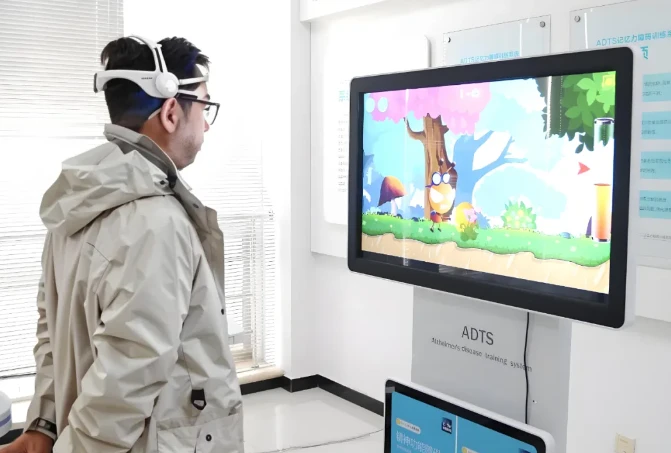
The ADTS Memory Impairment Training Device is a visual memory decline prevention training system developed based on EEG neurofeedback technology. Utilizing brain-computer interface technology, it delivers feedback training through specialized intelligent rehabilitation games to achieve self-optimization of brain electrical activity. Trainers mentally control the game progression, targeting improvements in multidimensional metrics including attention, memory, calculation, orientation, language, and comprehensive abilities. This enhances EEG complexity and approximate entropy, activates cortical neurons, and prevents further memory and cognitive decline or pathological changes, thereby achieving the goal of preventing cognitive impairment.
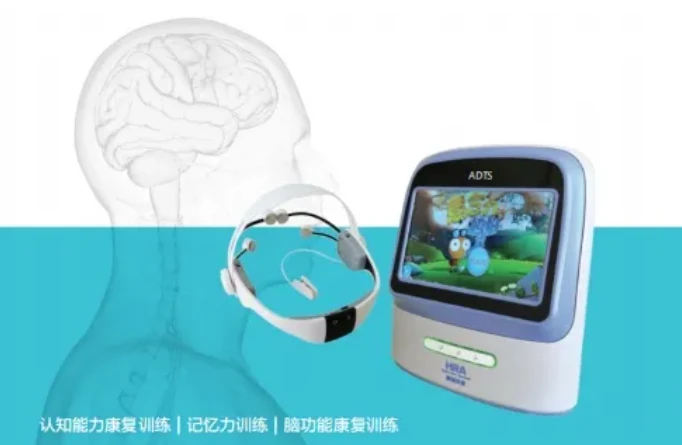
Older adults can not only receive centralized training at community health service centers but also utilize portable home-based devices for sustained intervention, transforming cognitive function support from "periodic guidance" into "routine management."
This closed-loop service model of "screening-assessment-intervention" not only enhances the effectiveness of intervention guidance but also enables more at-risk individuals to access professional cognitive function protection services right in their own neighborhoods. This shift propels grassroots cognitive impairment prevention and control efforts from "reactive response" to "proactive prevention."
Enhancing public awareness serves as a crucial social foundation for cognitive impairment prevention and control efforts. While leveraging technological devices for screening and intervention, primary healthcare institutions are seizing this opportunity to educate elderly individuals and their families about early warning signs and prevention knowledge through "on-site testing explanations + interpretation of screening results." This approach effectively raises public awareness of the condition, injecting grassroots momentum toward achieving the goal of "public awareness rate ≥80%." Accurate screening results and effective interventions also motivate more individuals with suspected cognitive impairment to proactively seek professional medical services, gradually advancing the goal of achieving a "consultation rate among suspected cases ≥50%."

From the ADDS cognitive impairment screening system fortifying the first line of defense for "early detection" to the ADTS memory impairment training device reinforcing the critical link of "early intervention," technological devices are leveraging their unique advantages to address the pain points and challenges in grassroots cognitive impairment prevention and treatment. Looking ahead, as more advanced technological devices reach grassroots communities and serve the public, primary healthcare institutions will further refine their comprehensive service chain encompassing "screening-intervention-diagnosis and treatment." This will effectively translate the objectives outlined in the National Action Plan for Dementia in the Elderly (2024–2030) into tangible outcomes for safeguarding cognitive health among older adults, thereby building a robust health barrier for constructing an age-friendly society.