


From Quantitative Screening to Targeted Activation: The Functional Medicine "Code" for Cognitive Health Management
As the pace of population aging accelerates, cognitive impairment and memory decline have increasingly become prominent issues affecting the health and quality of life for all citizens. From mild cognitive decline in the elderly to memory deterioration among middle-aged and young adults caused by work stress and irregular schedules, the demand for cognitive health management is growing ever more urgent.
The closed-loop model integrating ADDS cognitive impairment screening and ADTS memory impairment training, powered by functional medicine equipment, establishes a robust defense for comprehensive cognitive health management through the scientific approach of "early screening + early intervention."
Cognitive Impairment Screening: Guarding the First Line of Defense for Cognitive Health
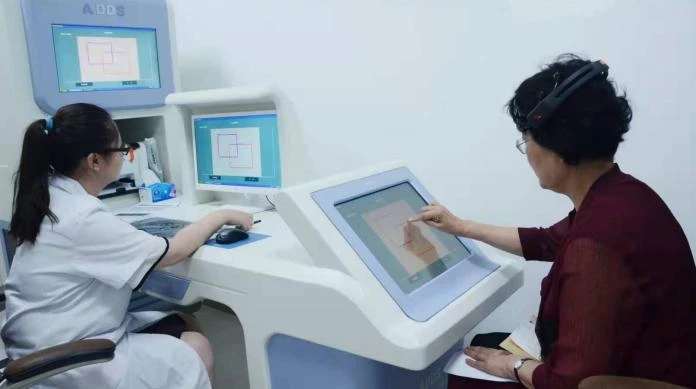
Traditional cognitive assessments primarily rely on subjective questionnaires and clinical scales, which are susceptible to interference from factors such as the examinee's emotional state and verbal expression abilities, making it challenging to accurately detect early signs of cognitive dysfunction. The advent of the ADDS Cognitive Impairment Screening System provides an authoritative, objective, and scientifically quantifiable solution for cognitive health screening.
The ADDS functional medicine device employs real-time human-computer interaction to collect neural activity signals via dynamic EEG monitoring technology. Utilizing specialized algorithms, it conducts multidimensional analysis across attention, executive function, language ability, and memory to comprehensively evaluate the examinee's cognitive state. This process ultimately generates a data-driven cognitive function report.

In clinical settings, the ADDS serves as a valuable tool for hospital neurology and geriatrics departments. It provides physicians with objective quantitative data to aid in the early identification of cognitive impairment risks and assess the severity of cognitive dysfunction. This enables timely intervention, buying valuable time to slow disease progression. In long-term care facilities and community service centers, ADDS excels at large-scale screening. As a routine monitoring tool for elderly cognitive health, it establishes personalized cognitive function profiles for seniors, enabling comprehensive management from initial screening to long-term dynamic tracking. This facilitates timely alerts regarding trends in cognitive function changes.
Memory Impairment Training: Targeted Intervention Activates Cerebral Cortex Cells
For individuals with cognitive dysfunction, the functional medical device ADTS-based on the principle of neuroplasticity-delivers personalized rehabilitation training tailored to diverse populations. This achieves a seamless transition from "identifying cognitive issues" to "resolving cognitive issues."

ADTS Memory Impairment Training utilizes brain-computer interface technology to enable users to control rehabilitation game progress through thought. The training targets multidimensional improvements in attention, memory, calculation, orientation, language, and comprehensive abilities. It enhances EEG complexity and approximate entropy, activates cortical neurons, and prevents further deterioration and pathological changes in memory and brain function.

In clinical rehabilitation settings, ADTS serves as a vital adjunct therapy for patients with cognitive impairment. When integrated with medication and rehabilitation care, it significantly enhances overall recovery outcomes and helps patients improve their ability to perform activities of daily living. In health management settings, ADTS expands its applicability to cover middle-aged and young adults experiencing memory decline due to chronic sleep deprivation and high-stress work. Through regular personalized training, it effectively alleviates brain fatigue, improves cognitive function, and prevents cognitive decline at its source.
Screening-Training-Follow-up: Building a Closed-Loop, Full-Cycle Cognitive Health Management System
The synergistic application of functional medicine devices ADDS and ADTS transcends mere technological integration. It establishes a closed-loop, full-cycle cognitive health management system encompassing "Screening-Training-Follow-up," elevating cognitive health management from fragmented to systematic approaches.
Examinees first undergo comprehensive cognitive screening via ADDS to assess their cognitive health status. Physicians then use quantitative reports to deliver precise diagnoses and formulate intervention strategies, such as targeted rehabilitation training through ADTS. During training, periodic ADDS assessments track changes in cognitive metrics to evaluate effectiveness, dynamically adjust training protocols, and establish a continuous follow-up mechanism.

This closed-loop management model is not only applicable to the prevention and treatment of cognitive impairment in the elderly but also provides a scientific solution for maintaining cognitive health in middle-aged and young adults.
As public health awareness continues to rise, functional medicine devices are driving cognitive health management toward new heights of precision and full-cycle care through technological innovation. The closed-loop model established by ADDS and ADTS expands cognitive health management beyond disease treatment to encompass early prevention and daily maintenance, safeguarding clear thinking and cherished memories for more people.