




China's latest report on Alzheimer's disease: Early screening is the key to prevention and control
Recently, China Alzheimer's Disease Report 2024, which is jointly researched and compiled by experts and scholars from more than10 authoritative institutions, including the China Center for Disease Control and Prevention (CDC), Renji Hospital of Shanghai Jiaotong University School of Medicine (SJUMS), School of Public Health of Fudan University (FDU SPH), Shanghai Center for Mental Health (SCMH), Ruijin Hospital of Shanghai Jiaotong University School of Medicine (SJUMS), and Fujian Medical University (FMU), was released in Shanghai. The Report presents the latest Alzheimer's disease statistics in China: in 2021, the number of people suffering from AD and other dementias in China amounted to 16,990,800 cases, and the number of deaths due to AD and other dementias globally amounted to 1,955,800 cases, of which 492,700 deaths due to AD and other dementias in China accounted for about 25.2% of the global number of deaths.


In May 2024, the China Blue Book of Alzheimer's Disease was released, which is jointly developed by the National Center for Neurological Diseases at Xuanwu Hospital of Capital Medical University, the Center for Chronic Non-communicable Disease Prevention and Control of the Chinese Center for Disease Control and Prevention (CCDC), the Center for Capacity Building and Continuing Education of the National Health Commission (NHRC), and the China Population and Development Research Center (CPDR). The Blue Book points out the current diagnostic pain points of Alzheimer's disease in China, analyzes pharmacological and non-pharmacological treatments, and clarifies that the key to the prevention and control of Alzheimer's disease is early screening.

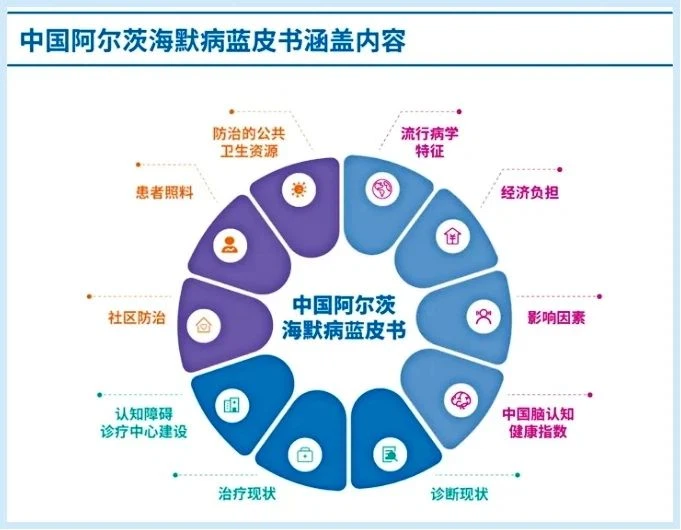
AD Diagnosis Pain Points in China: Diagnostic Discrepancies and Diagnostic Delays
Currently, there are differences in the diagnosis of AD and other cognitive disorders in different levels of hospitals in China, affecting the accuracy of diagnosis. Especially in non-teaching tertiary hospitals in large and medium-sized cities, diagnosis is usually made by neurologists who have not received specialized training in cognitive impairment diseases, with a simplified process, often relying on personal experience, resulting in some patients may not be able to obtain an accurate diagnosis; in district and county hospitals that do not have a cognitive impairment diagnosis and treatment center or memory clinic, diagnosis is usually made by inexperienced internal medicine physicians, with a high proportion of misdiagnosis and missed diagnosis.
Diagnostic delay is also one of the pain points in the current diagnostic status of patients with AD and other cognitive disorders in China. Alzheimer's Disease in China 2023: Facts and Figures states that 32.6% of AD patients were diagnosed within 1 year of symptom onset, and 71.6% were diagnosed within 2 years of symptom onset. Factors influencing the delay in diagnosis are complex and include the belief that "forgetfulness in the elderly is not a disease" (65.1%), "economic difficulties" (19.7%), and "a sense of stigma" (15.2%). 15.2%).

Experts suggest that in hospitals that do not have the capacity to set up cognitive impairment diagnosis and treatment centers or memory clinics, auxiliary scientific and technological examination equipment can be configured in neurology, internal medicine, and other clinics. For example, ADDS and ADTS cognitive dysfunction screening system combines the international common scale with dynamic EEG monitoring, and provides clinical evidence of cognitive dysfunction and early AD through computerized detection and analysis and special algorithms. This not only improves the scientificity and accuracy of diagnosis, but also avoids misdiagnosis and omission caused by doctors' subjective reasons. Moreover, the testing mode of human-computer interaction and "dialog" with the computer can also help reduce the "sense of shame" of patients and enhance their confidence in coping with the disease.
Current status of pharmacologic and non-pharmacologic treatments for AD
The number of AD drug clinical trials in China has increased in recent years, with 31 trials completed in the past 10 years. Although medication has helped to alleviate AD symptoms, patients' medication use remains unsatisfactory.
Non-pharmacological treatments have made some progress in helping patients maintain cognitive function and daily living ability and improve psychobehavioral symptoms. They mainly include cognitive interventions, neuromodulation and exercise therapy.
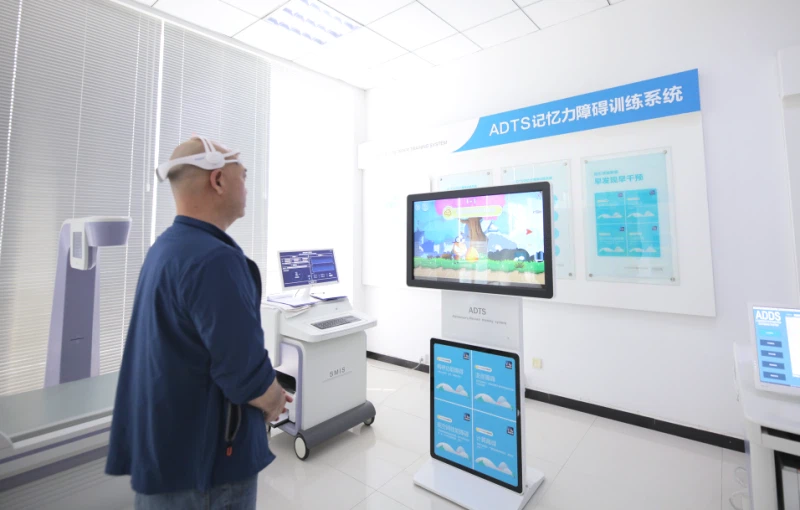
ADTS Memory Disorder Training
Cognitive training enhances cognitive functions and reserves, such as ADTS memory disorder training, which takes the improvement of multi-dimensional indicators such as attention, memory, calculation, orientation, language and comprehensive ability as the training goal, and trains through the form of professional intelligent rehabilitation games, which can effectively improve the complexity of the EEG and the proximity entropy, activate the cerebral cortex neural cells, and prevent the further degradation and lesions of the memory and the brain function, in order to achieve the purpose of preventing cognitive disorders.The Chinese Guidelines on Cognitive Training (2022 Edition) and the Chinese Expert Consensus on Cognitive Digital Therapy (2023) released in 2019 further provide a basis for clinical treatment.
Neuromodulation regulates nervous system signaling through physical or chemical means to improve disease symptoms. It mainly includes brain function stimulation (invasive and non-invasive), such as repetitive transcranial magnetic stimulation, transcranial direct/AC electrical stimulation, pulsed magnetic microcirculation therapy and photobiomodulation. These techniques are non-invasive, have fewer adverse effects, and relevant clinical trials have shown effectiveness in helping to maintain or improve cognitive function, quality of life, and daily living ability of AD patients.2023 The Chinese Expert Consensus on Non-invasive Neuromodulation Techniques for Assisting Alzheimer's Disease Treatment, which was released in 2023, provides a clinical reference for selecting appropriate therapies.

PMR Pulsed Magnetic Microcirculation Therapy
Early screening is the key to preventing and controlling AD
In order to further improve the level of AD prevention and control in China, the Blue Book gives several suggestions:
--Strengthen early prevention and control measures for AD, including increasing the popularization of AD-related knowledge, especially the means of prevention;
--Promote the digital diagnosis and treatment service model of cognitive disorders of "standardized diagnosis and treatment in cognitive centers, screening and management in community memory clinics, and continuous intervention and monitoring at home";
--Encourage the innovation and promotion of the application of AD diagnosis and treatment technologies, increase support for scientific and technological innovation in the fields of AD diagnosis and intervention, promote the application and popularization of advanced auxiliary diagnostic technologies and interventions, and realize the goal of "early detection, early diagnosis and early treatment" of cognitive impairment diseases. The goal of "early detection, early diagnosis and early treatment" of cognitive disorders will be realized.