


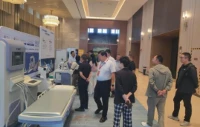


Non-Pharmacological Intervention for Cognitive Impairment: HSAP's Innovative Chinese Prevention and Treatment Model

Cognitive impairment is a syndrome characterized by acquired, persistent cognitive dysfunction that impairs patients' ability to perform daily activities and work, and may be accompanied by psychiatric and behavioral abnormalities. Based on severity, this condition can be categorized into three stages: subjective cognitive decline, mild cognitive impairment (MCI), and dementia.
Epidemiological data indicate that the global dementia population reached 57.4 million in 2019. By 2050, this figure is projected to rise to 152 million, with related deaths increasing to 4.91 million. In China, the number of dementia patients among those aged 60 and above has reached 15.07 million, with approximately 38.77 million individuals experiencing mild cognitive impairment. Together, these figures account for 25.0% of the global total of people with cognitive impairment, making China the country with the largest scale of such conditions worldwide.

From the perspective of disease-related factors, approximately 11% of hypertensive patients develop cognitive impairment, while 18.5% of elderly diabetic patients experience mild cognitive impairment. Within the realm of psychiatric disorders, over 75% of schizophrenia patients exhibit accompanying cognitive dysfunction.
This underscores the critical practical significance of effectively controlling the progression of cognitive impairment to mitigate its health and societal impacts.
The Chinese Expert Consensus on Non-Pharmacological Interventions for Cognitive Impairment Disorders (2025 Edition) explicitly states that current pharmacological treatments for cognitive impairment predominantly target patients in the dementia stage. These treatments often present challenges such as high drug dependency, significant adverse reactions in some patients, and suboptimal efficacy. For the larger population of individuals with mild cognitive impairment and those at risk of developing the condition, non-pharmacological approaches such as neuromodulation and exercise interventions have become the primary clinical strategies for prevention and treatment.
HSAP Medical Systems Co., Ltd. leverages three core technologies-artificial intelligence, brain-computer interfaces, and neuromodulation- to develop a comprehensive closed-loop solution for cognitive impairment that integrates screening, training, and assessment. This solution, built on China's original technological prowess, breaks through international technical barriers in neuromodulation and contributes an efficient, precise "Chinese solution" to global Alzheimer's disease prevention and treatment efforts.
As a high-tech enterprise in the biomedical field, HSAP has dedicated years to medical electronics R&D, consistently addressing the global diagnostic and therapeutic challenges of Alzheimer's disease: the difficulty of early detection and the lack of targeted interventions. The company's independently developed ADDS Cognitive Impairment Screening System and ADTS Memory Impairment Training System form China's first integrated closed-loop solution combining intelligent screening with non-pharmacological intervention. Its core technical indicators meet internationally advanced standards and have been successfully selected for the "China Good Technology" project repository.

The ADDS cognitive impairment screening system employs non-invasive brain-computer interface technology. By integrating artificial intelligence with authoritative assessment scales, it captures real-time neural signals from subjects. Paired with proprietary AI deep learning algorithms, the system rapidly extracts multidimensional cognitive characteristics-including memory, attention, and executive function- as subjects complete standardized cognitive tasks. The entire screening process takes only 15 minutes to generate a quantitative assessment report, achieving over 90% accuracy. Fully intelligent, non-invasive, and user-friendly, the system meets tertiary hospitals' demands for precise diagnosis of complex cases while also adapting to community-based mass screening applications.

The ADTS Memory Impairment Training System also leverages non-invasive brain-computer interface technology, enabling subjects to control rehabilitation game processes through thought. This enhances the brain's approximate entropy and complexity, thereby achieving an intervention effect that prevents memory decline. Clinical practice has demonstrated that patients with mild to moderate cognitive impairment who consistently use this system for over three months achieve an average increase of 4–6 points on the Memory Function Standardized Score (MMSE), with significant improvements in activities of daily living. Crucially, after completing a phase of intervention training, the ADDS Cognitive Impairment Screening System can be used to evaluate training outcomes, effectively addressing the shortcomings of traditional rehabilitation training-namely, its lack of targeting and unclear efficacy.
Leveraging its exceptional technical adaptability and clinical utility, HSAP's dual ADDS+ADTS system has established an application network across diverse medical settings in China. It serves as a crucial technological pillar for advancing Alzheimer's disease prevention and treatment to earlier stages, meeting the personalized needs of healthcare institutions at various levels and of different types.
At tertiary hospitals, leading neurodiagnostic institutions such as Hebei Provincial People's Hospital and Tongji Hospital (affiliated with Tongji Medical College, Huazhong University of Science and Technology) leverage the precise data provided by the dual systems to deliver objective evidence for personalized treatment of complex cases, significantly enhancing diagnostic accuracy and efficiency.


At the specialized and specialized institutions level, mental health centers in Shanghai's Jing'an, Changning, and Yangpu districts leverage the system's intelligent screening capabilities and user-friendly operation to conduct community-based early screening and tiered interventions, effectively improving treatment adherence among early-stage patients. Meanwhile, Inner Mongolia International Mongolian Medicine Hospital innovatively explores a collaborative intervention pathway integrating modern technology with traditional medicine, injecting innovative vitality into neurohealth safeguards for ethnic regions.
At the primary healthcare level, grassroots medical institutions such as Qian'an People's Hospital, LiPu People's Hospital in Guangxi, and Minxian Traditional Chinese Medicine Hospital in Gansu have leveraged this technology to fill gaps in county-level early screening for cognitive impairment and Alzheimer's disease. This empowers local physicians to move beyond "experience-based diagnosis," extending early screening and diagnosis to county-level areas and supporting the implementation of tiered diagnosis and treatment policies.

In the future, HSAP will continue to deepen collaborative innovation among industry, academia, and research, partnering with leading research institutes and clinical institutions to iteratively optimize algorithm models and upgrade equipment performance. In the domestic market, the company will expand applications to community healthcare, elderly care facilities, and health management centers, promoting widespread early screening and diagnosis for Alzheimer's disease. Internationally, HSAP will accelerate its expansion into Southeast Asia, Europe, and other regions, refining its global service system to extend China's original neurohealth technology to more countries and regions. This will enhance China's international influence in medical technology and inject robust Chinese momentum into the high-quality development of global neurohealth initiatives.