


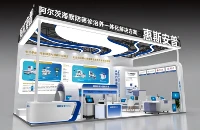
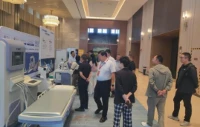

The P300 attention training brain-computer interface device, jointly developed by HSAP and Tongji Hospital, won first prize in the cognitive function rehabilitation category at the 4th China Brain-Computer Interface Competition.
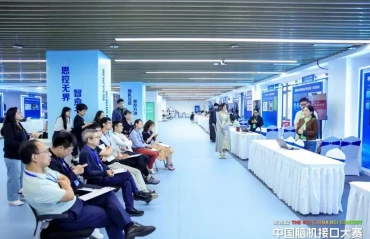
On September 18, the finals of the Rehabilitation Clinical Applications category of the 4th China Brain-Computer Interface Competition were held in Wuhan. Twenty-two teams from universities, hospitals, and companies across the country competed in the field of clinical rehabilitation applications of brain-computer interfaces. The P300 attention training brain-computer interface device, jointly developed by HSAP and Tongji Hospital Affiliated to Tongji Medical College of Huazhong University of Science and Technology, won first prize in the cognitive function rehabilitation category at the 4th China Brain-Computer Interface Competition.
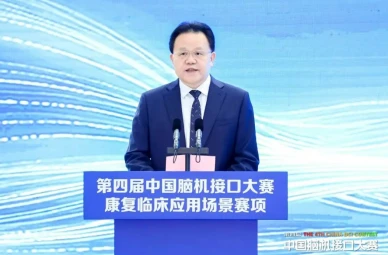
Professor Zhouping Tang , Director of the Brain-Computer Interface Research Institute at Huazhong University of Science and Technology, provided an on-site overview of the competition.
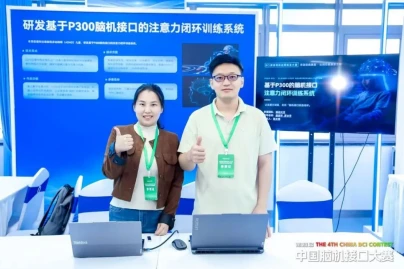
Contestants in the P300 Brain-Computer Interface Attention Training System Competition
In March 2026, HSAP formally signed a strategic cooperation agreement with Tongji Hospital, affiliated with the Tongji Medical College of Huazhong University of Science and Technology. By integrating top-tier clinical resources and cutting-edge R&D capabilities, the two parties will conduct in-depth collaborative research on brain-computer interface (BCI) technology in areas such as cognitive rehabilitation, autism intervention in children, and sleep disorder intervention, and will jointly advance the R&D and clinical translation of BCI-related devices.
The team's competition entry, titled "P300 Event-Related Potential (ERP)-Based Closed-Loop Attention Training and External Feedback Control System," provides intelligent, personalized cognitive rehabilitation training programs for individuals with attention disorders, including Attention-Deficit/Hyperactivity Disorder (ADHD), Autism Spectrum Disorder (ASD), post-stroke cognitive impairment, and age-related attention decline.
The system uses the P300 as an objective neural indicator to collect EEG signals in real time and assess attention status. It provides immediate feedback by controlling external devices such as toy cars and robots, thereby establishing a closed-loop training model consisting of "EEG acquisition-online decoding-external feedback." At the same time, the system can automatically adjust the training difficulty based on neural activity during the training process, enabling personalized, adaptive attention training.
Compared to traditional cognitive training, which relies on behavioral performance, and neural feedback methods that depend on EEG frequency band energy, this project directly uses the P300 neural activation level as the training target. By organically integrating neural state assessment, external feedback, and intelligent regulation, it not only enhances the enjoyment and adherence to training but also holds promise for further strengthening the neuroplasticity of the attentional network and improving rehabilitation outcomes. The system can be applied in various settings, including hospital rehabilitation departments, pediatric developmental and behavioral clinics, special education institutions, and home-based rehabilitation, and holds significant clinical value and potential for widespread adoption.


As a national high-tech enterprise specializing in the research and development of devices for full-lifecycle mental and physical health management, HSAP has been deeply involved in the field of non-invasive brain-computer interface technology for many years and has established a mature portfolio of technologies and products. Its independently developed ADDS Cognitive Impairment Screening System innovatively integrates "artificial intelligence and brain-computer interface" technologies. It conducts initial assessments through voice and image-based human-machine interaction and uses AI algorithms to deeply analyze EEG characteristics, enabling rapid and accurate differentiation between individuals with normal cognition, those with mild cognitive impairment, and those at risk for Alzheimer's disease (AD), thereby providing a scientific basis for early screening and diagnosis.
Addressing the clinical challenge that AD is "incurable but effectively manageable," HSAP has launched the ADTS Memory Impairment Training Device, which is centered on non-invasive brain-computer interface technology. By allowing trainees to control smart rehabilitation games through "mind control," the device activates brain neurons and dynamically enhances the brain's focus, complexity, and apparent entropy. This enables safe, efficient, and engaging brain function enhancement training, offering a novel non-pharmacological intervention for individuals with cognitive impairment.
Winning this competition represents a significant practical validation of the joint medical-engineering research and development achievements between HSAP and Tongji Hospital. Both parties will continue to deepen their strategic cooperation, refine clinical validation, accelerate the commercialization of brain-computer interface cognitive rehabilitation technology, and transform cutting-edge brain technology into a powerful force for safeguarding public health.