


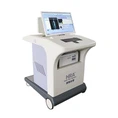

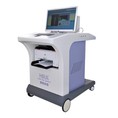
In the field of medical diagnostics, the ability to accurately measure drug levels in the blood is of paramount importance. It plays a crucial role in personalized medicine, ensuring that patients receive the optimal dosage of medications for effective treatment while minimizing the risk of adverse effects. As a supplier of Blood Test Device, we are at the forefront of developing and providing cutting - edge technology to meet the diverse needs of the medical community. In this blog, we will explore the question: Can a blood test device measure drug levels in the blood?
The Significance of Measuring Drug Levels in the Blood
Therapeutic drug monitoring (TDM) is a practice that involves measuring the concentration of drugs in a patient's blood. This process is essential for several reasons. Firstly, different patients may metabolize drugs at different rates due to factors such as genetics, age, diet, and concurrent medical conditions. For example, some individuals may have genetic variations that cause them to metabolize a particular drug more rapidly, resulting in sub - therapeutic levels if the standard dosage is administered. By measuring drug levels, healthcare providers can adjust the dosage to achieve the desired therapeutic effect.
Secondly, many drugs have a narrow therapeutic index, which means that the difference between a therapeutic dose and a toxic dose is small. For drugs like warfarin, an anticoagulant, maintaining the correct blood level is critical. Too low a level may not prevent blood clots, while too high a level can lead to excessive bleeding. Therefore, regular monitoring of drug levels helps to ensure patient safety and treatment efficacy.

How Blood Test Devices Work
Modern blood test devices, such as our Blood Test Device, are designed to analyze various components in the blood. These devices use a variety of techniques, including immunoassays, chromatography, and mass spectrometry.
Immunoassays are widely used for drug level measurement. They are based on the principle of antigen - antibody reactions. Antibodies specific to the drug of interest are used to bind to the drug molecules in the blood sample. The amount of bound drug can then be measured using various detection methods, such as fluorescence or enzyme - linked immunosorbent assay (ELISA). Immunoassays are relatively fast, cost - effective, and can be automated, making them suitable for high - throughput testing in clinical laboratories.
Chromatography techniques, such as high - performance liquid chromatography (HPLC) and gas chromatography (GC), separate the components of a blood sample based on their physical and chemical properties. The separated drug components are then detected and quantified. Chromatography offers high specificity and accuracy, making it ideal for measuring complex mixtures of drugs and their metabolites. However, it is generally more time - consuming and requires more sophisticated equipment compared to immunoassays.

Mass spectrometry is a powerful analytical technique that can identify and quantify drugs based on their mass - to - charge ratio. It can provide detailed information about the structure and composition of the drug molecules, allowing for the detection of even trace amounts of drugs and their metabolites. Mass spectrometry is often combined with chromatography to enhance the accuracy and sensitivity of drug level measurement.
Our Blood Test Devices for Drug Level Measurement
Our company offers a range of Blood Test Device that are specifically designed for drug level measurement. These devices are equipped with state - of - the - art technology to ensure accurate and reliable results.
One of our flagship products is the Red Blood Cell Detector, which can be used in conjunction with other modules for comprehensive blood analysis, including drug level measurement. The detector uses advanced optical and electronic sensors to detect and analyze the components of the blood sample. It has a high - resolution detection system that can accurately measure the concentration of drugs in the blood.
Our blood test devices are also user - friendly, with intuitive interfaces and automated processes. This makes them suitable for use in a variety of settings, from large - scale clinical laboratories to small - scale medical practices. They are designed to be highly efficient, with fast turnaround times, allowing healthcare providers to quickly obtain the information they need to make informed treatment decisions.
Challenges and Limitations
While blood test devices have made significant progress in measuring drug levels in the blood, there are still some challenges and limitations. One of the main challenges is the complexity of the blood matrix. Blood contains a variety of proteins, cells, and other substances that can interfere with the measurement of drugs. This requires careful sample preparation and the development of specific assays to minimize interference.
Another limitation is the need for calibration and quality control. To ensure accurate and reliable results, blood test devices need to be calibrated regularly using reference standards. Quality control measures also need to be in place to monitor the performance of the devices over time.
In addition, the cost of some advanced blood test devices and the associated reagents can be relatively high, which may limit their widespread use, especially in resource - limited settings.
Future Developments
The future of blood test devices for drug level measurement looks promising. Advances in technology, such as the development of nanosensors and microfluidics, are expected to improve the sensitivity, specificity, and portability of these devices. Nanosensors can detect drugs at very low concentrations, while microfluidics can reduce the sample volume and analysis time.
In addition, the integration of artificial intelligence and machine learning algorithms into blood test devices is likely to enhance the accuracy of drug level measurement. These algorithms can analyze large amounts of data and identify patterns that may not be apparent to human operators, leading to more precise and personalized treatment recommendations.
Conclusion
In conclusion, blood test devices can indeed measure drug levels in the blood. Our company, as a leading supplier of Blood Test Device, is committed to providing high - quality, innovative solutions for drug level measurement. Our devices use advanced technologies to ensure accurate and reliable results, and we are constantly working to overcome the challenges and limitations in this field.
If you are interested in our blood test devices for drug level measurement or have any questions about our products, we encourage you to contact us for further discussion and potential procurement. We are dedicated to working with healthcare providers, researchers, and other partners to improve patient care through the use of advanced blood testing technology.
References
- Kearney, M. T., & Desai, A. S. (2019). Therapeutic Drug Monitoring: Principles and Practice. American Society of Health - System Pharmacists.
- Li, J., & Zhang, Y. (2020). Advances in Analytical Techniques for Therapeutic Drug Monitoring. Journal of Chromatography B, 1141, 122237.
- Wang, L., & Wang, X. (2021). Nanosensors for Biomedical Applications. Chemical Reviews, 121(14), 8372 - 8447.