



In the modern healthcare landscape, health risk assessment devices have emerged as indispensable tools for both medical professionals and individuals seeking to proactively manage their health. These devices are designed to collect, analyze, and interpret a vast array of data to provide comprehensive health risk evaluations. As a supplier of health risk assessment devices, I have witnessed firsthand the challenges and innovations associated with handling large amounts of data. In this blog post, I will delve into the strategies and technologies employed by these devices to effectively manage and leverage big data for improved health outcomes.
Data Collection: The Foundation of Health Risk Assessment
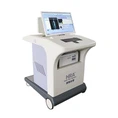
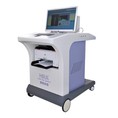
The first step in the process of health risk assessment is data collection. Our health risk assessment devices are equipped with a variety of sensors and interfaces that can gather data from multiple sources, including physiological signals, lifestyle factors, and medical history. For example, Full Body Health Analyzer Machine can measure vital signs such as blood pressure, heart rate, and body temperature, as well as detect biomarkers in the blood and urine. These devices can also collect data on physical activity, diet, sleep patterns, and stress levels through wearable devices and mobile applications.
To ensure the accuracy and reliability of the collected data, our devices are designed with advanced calibration and validation mechanisms. The sensors are regularly calibrated to maintain their precision, and the data is validated against established standards and reference values. Additionally, we employ data quality control algorithms to identify and remove any outliers or errors in the data. This rigorous approach to data collection ensures that the health risk assessment results are based on high-quality, trustworthy data.
Data Storage: Managing the Volume and Variety of Data
Once the data is collected, it needs to be stored securely and efficiently for further analysis. Our health risk assessment devices are integrated with data storage systems that can handle large volumes of data. These systems are designed to scale horizontally, allowing for the addition of storage capacity as the data volume grows. We use a combination of on-premises and cloud-based storage solutions to ensure data accessibility and redundancy.
In addition to managing the volume of data, our storage systems are also designed to handle the variety of data types collected by the devices. The data can be structured, such as numerical values and categorical variables, or unstructured, such as text notes and images. Our storage systems support a wide range of data formats and can store the data in a way that is optimized for retrieval and analysis. We also implement data encryption and access control mechanisms to protect the privacy and security of the stored data.
Data Analysis: Extracting Insights from Big Data
The real value of the collected data lies in its analysis. Our health risk assessment devices are equipped with advanced data analysis algorithms that can process and interpret the large amounts of data to identify patterns, trends, and correlations. These algorithms use machine learning and artificial intelligence techniques to analyze the data and generate personalized health risk assessments.
One of the key challenges in data analysis is dealing with the complexity and heterogeneity of the data. The data collected by our devices can come from multiple sources and have different formats and structures. To address this challenge, we use data integration techniques to combine the data from different sources and transform it into a unified format. We also use feature engineering techniques to extract relevant features from the data and reduce its dimensionality.
Once the data is preprocessed, our machine learning algorithms can be applied to analyze the data and generate health risk assessments. These algorithms can be trained on large datasets to learn the patterns and relationships between different health factors and disease outcomes. The trained models can then be used to predict the likelihood of developing certain diseases or conditions based on the individual's health data.
Data Visualization: Communicating Insights to Users
The results of the data analysis need to be presented in a clear and understandable way to the users. Our health risk assessment devices are designed with user-friendly interfaces that can display the health risk assessment results in a visually appealing and intuitive manner. We use a variety of data visualization techniques, such as charts, graphs, and dashboards, to present the data in a way that is easy to interpret.
The data visualization tools also allow the users to interact with the data and explore the results in more detail. For example, the users can drill down into specific health factors or time periods to see how they have changed over time. They can also compare their health data with that of other individuals or population averages to get a better understanding of their health status.
Data Security and Privacy: Protecting User Information
In the era of big data, data security and privacy are of utmost importance. Our health risk assessment devices are designed with robust security features to protect the user's personal and health information. We implement data encryption, access control, and authentication mechanisms to ensure that only authorized personnel can access the data. We also comply with all relevant data protection regulations, such as the General Data Protection Regulation (GDPR) and the Health Insurance Portability and Accountability Act (HIPAA).
In addition to technical security measures, we also have a strong privacy policy in place to protect the user's privacy. We only collect the data that is necessary for the health risk assessment and do not share the data with third parties without the user's consent. We also provide the users with the option to delete their data at any time.
Conclusion
In conclusion, health risk assessment devices play a crucial role in modern healthcare by collecting, analyzing, and interpreting large amounts of data to provide personalized health risk assessments. As a supplier of these devices, we are constantly innovating and improving our technologies to handle the challenges associated with big data. By using advanced data collection, storage, analysis, visualization, and security techniques, we are able to provide our customers with accurate, reliable, and user-friendly health risk assessment solutions.


If you are interested in learning more about our Full Body Scanner Machine in Hospital or Health Checkup Machine and how they can help you manage your health, please contact us to start a procurement discussion. We look forward to working with you to improve the health and well-being of your patients or customers.
References
- Chen, Y., & Liu, Y. (2018). Big data analytics in healthcare: Challenges and opportunities. Journal of Medical Systems, 42(1), 1-10.
- Kaushik, R., & Kumar, V. (2019). Machine learning in healthcare: A review. Journal of Healthcare Engineering, 2019, 1-13.
- Liang, X., & Zhang, Y. (2020). Data visualization for healthcare: A review. Journal of Biomedical Informatics, 106, 103437.
- Wang, Y., & Zhang, Y. (2021). Data security and privacy in healthcare big data: A review. Journal of Medical Systems, 45(1), 1-13.