


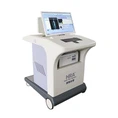

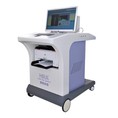
Hey there! As a supplier of red blood cell detectors, I often get asked about how these nifty devices can detect red blood cell parasites. So, I thought I'd take a few minutes to break it down for you in a way that's easy to understand.
First off, let's talk about why detecting red blood cell parasites is so important. Parasites that infect red blood cells can cause a whole host of health problems, from mild discomfort to life - threatening diseases. Malaria is one of the most well - known examples. It's caused by Plasmodium parasites, which invade red blood cells and multiply inside them. If left untreated, malaria can lead to severe illness and even death. That's where our Red Blood Cell Detector comes in.
So, how does it work? Well, there are a few different methods that our detector uses to spot these pesky parasites. One of the primary techniques is microscopy. Our detector is equipped with high - resolution microscopes that can magnify blood samples to a level where individual red blood cells and any parasites within them can be clearly seen.
When a blood sample is placed on a slide and inserted into the detector, the microscope starts scanning the sample. It moves across the slide in a systematic way, looking at different areas of the blood smear. The detector's software is programmed to recognize the characteristic shapes and sizes of red blood cells and parasites. For example, Plasmodium parasites have a distinct appearance at different stages of their life cycle. In the early stages, they might look like small rings inside the red blood cells. As they develop, they take on more complex shapes. The software compares what it sees in the blood sample with a database of known parasite images to make a positive identification.
Another method our detector uses is fluorescence - based detection. Some parasites have unique fluorescent properties. We can use special dyes that bind to these parasites and then shine a specific wavelength of light on the blood sample. When the dye - bound parasites are exposed to this light, they emit fluorescence. The detector has sensors that can pick up this fluorescence, allowing it to detect the presence of parasites even in very low concentrations.
Our Blood Test Device also incorporates image analysis algorithms. These algorithms go beyond simple shape recognition. They can analyze the texture, color, and other visual features of the objects in the blood sample. For instance, infected red blood cells might have a different color or texture compared to healthy ones. The algorithms can detect these subtle differences and flag potential parasite - infected cells.
In addition to these optical methods, our detector can also use flow cytometry. In flow cytometry, the blood sample is passed through a narrow channel one cell at a time. As each cell passes through, it is illuminated by a laser. The light scattered by the cell is measured in different directions, and the fluorescence emitted by any labeled parasites is also detected. This provides detailed information about the size, shape, and internal structure of each cell. By analyzing the data from thousands of cells in the sample, the detector can quickly identify the presence of red blood cell parasites.
One of the great things about our red blood cell detector is its speed and accuracy. Traditional methods of parasite detection, like manual microscopy, can be time - consuming and prone to human error. Our device can analyze a blood sample in a matter of minutes, providing reliable results. This is especially important in areas where malaria and other blood - borne parasitic diseases are prevalent. Quick and accurate diagnosis means that patients can start treatment sooner, which can significantly improve their chances of recovery.
Our Blood Test Device is also designed to be user - friendly. You don't need to be a highly trained technician to operate it. The interface is intuitive, and the software provides step - by - step instructions. This makes it suitable for use in a variety of settings, from large hospitals to small clinics in remote areas.
If you're in the market for a reliable red blood cell detector, we've got you covered. Our products are backed by years of research and development, and we're constantly working to improve their performance. Whether you're a healthcare provider looking to upgrade your diagnostic equipment or a researcher studying blood - borne parasites, our detector can meet your needs.
We understand that purchasing medical equipment is a big decision. That's why we offer a range of support services. Our team of experts can provide training on how to use the detector effectively. We also offer maintenance and repair services to ensure that your device is always in top - notch condition.
If you're interested in learning more about our red blood cell detector or would like to discuss a potential purchase, don't hesitate to get in touch. We're here to answer any questions you might have and help you find the best solution for your needs.


References
- "Diagnostic Methods for Malaria" - World Health Organization
- "Flow Cytometry: Principles and Applications" - John Wiley & Sons
- "Fluorescence Microscopy in Parasite Detection" - Journal of Parasitology Research