


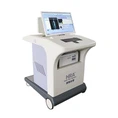

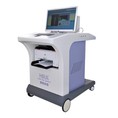
Hey there! As a supplier of red blood cell detectors, I often get asked about how these nifty devices can detect red blood cell schistocytes. So, let's dive right in and explore this topic together.
First off, what are red blood cell schistocytes? Well, they're basically fragmented red blood cells. These fragments can occur due to a variety of reasons, like mechanical damage in the blood vessels, certain medical conditions, or even as a side - effect of some treatments. Detecting them is super important because their presence can be a sign of serious health issues such as disseminated intravascular coagulation (DIC), hemolytic uremic syndrome (HUS), or thrombotic thrombocytopenic purpura (TTP).
Now, let's talk about how our Red Blood Cell Detector gets the job done.
Optical Detection Methods
One of the most common ways our detector works is through optical methods. You see, red blood cells have a specific shape and size under normal conditions. They're like little biconcave discs. But schistocytes have irregular shapes and sizes.
Our detector uses a light source, usually a laser. When a blood sample passes through the detection chamber, the laser light shines on the cells. Normal red blood cells scatter the light in a predictable pattern. But schistocytes, with their abnormal shapes, scatter the light differently.
The detector has light sensors that pick up these scattered light patterns. Special software then analyzes the data from the sensors. It compares the light - scattering patterns of the cells in the sample with pre - stored patterns of normal red blood cells and known schistocytes. If the pattern doesn't match that of a normal red blood cell, the software flags it as a potential schistocyte.
Electrical Impedance
Another method our red blood cell detector employs is electrical impedance. In this process, the blood sample is suspended in a conductive fluid and passed through a small aperture. When a cell passes through this aperture, it causes a change in the electrical resistance of the fluid.
The size of the change in resistance is related to the size of the cell. Normal red blood cells have a relatively consistent size, so they cause a predictable change in resistance. Schistocytes, being smaller and more irregular, cause different changes in resistance compared to normal cells.
Our detector measures these changes in electrical resistance very precisely. The data is then sent to the software, which again compares it with the expected values for normal red blood cells. If the change in resistance doesn't fit the normal pattern, it could indicate the presence of a schistocyte.
Flow Cytometry
Flow cytometry is also a key part of our detection process. In flow cytometry, the blood cells are labeled with fluorescent dyes. Different dyes can bind to different components of the cells.
When the labeled cells pass through a flow cytometer in our detector, a laser excites the fluorescent dyes. The dyes then emit light at specific wavelengths. The detector has detectors that can pick up this emitted light.
Schistocytes may have different surface characteristics compared to normal red blood cells. So, the fluorescent dyes may bind to them differently, resulting in different fluorescence signals. The software analyzes these signals to distinguish between normal red blood cells and schistocytes.
Image Analysis
Our Blood Test Device also uses advanced image - analysis techniques. A high - resolution camera takes images of the blood cells as they pass through the detection area.
The images are then processed by the software. It can identify the shape, size, and color of each cell in the image. The software has algorithms that can detect the irregularities in the shape and size that are characteristic of schistocytes.


For example, it can look for cells with jagged edges, pointed ends, or abnormal curvatures. Once the software identifies these features, it marks the cell as a potential schistocyte.
Advantages of Our Red Blood Cell Detector
One of the great things about our detector is its high accuracy. The combination of multiple detection methods, like optical detection, electrical impedance, flow cytometry, and image analysis, means that we can detect schistocytes with a very low false - positive rate.
It's also very fast. A blood sample can be analyzed in just a few minutes, which is crucial in a clinical setting where quick results can make a big difference in patient treatment.
Our detector is easy to use. It has a user - friendly interface that allows medical staff to quickly start the analysis and view the results. And it's also very reliable. We've put it through rigorous testing to ensure that it works consistently over time.
Importance of Detecting Schistocytes
Detecting schistocytes is not just a cool technical feat. It has real - world implications for patient health. As I mentioned earlier, the presence of schistocytes can be a sign of serious medical conditions.
For example, in DIC, the body's normal blood - clotting system goes haywire, leading to the formation of small blood clots in the blood vessels. These clots can shear red blood cells, creating schistocytes. Early detection of schistocytes can help doctors diagnose DIC early and start appropriate treatment, which can save a patient's life.
In HUS and TTP, schistocytes are also commonly found. These conditions can cause kidney damage and other serious complications. By detecting schistocytes, doctors can start treatment earlier, potentially reducing the severity of the disease and improving the patient's prognosis.
Why Choose Our Red Blood Cell Detector?
As a supplier, we're committed to providing the best - quality products. Our Blood Test Device is manufactured in a state - of - the - art factory with strict quality control measures.
We also offer excellent customer support. If you have any questions about how to use the detector, or if you run into any technical issues, our team of experts is always ready to help.
We're constantly improving our technology. We invest a lot in research and development to make our detector even more accurate, faster, and easier to use.
If you're in the market for a reliable red blood cell detector that can accurately detect schistocytes, we'd love to talk to you. Whether you're a hospital, a diagnostic laboratory, or a research institution, our detector can meet your needs.
Contact us to start a discussion about your requirements. We can provide you with more detailed information about our products, pricing, and support services. Let's work together to improve patient care through accurate and timely detection of red blood cell schistocytes.
References
- Jaffe, E. A. (Ed.). (2019). Hematology: Basic Principles and Practice. Elsevier.
- Rodak, B. F., & Carr, J. H. (2017). Clinical Hematology Atlas. Elsevier.
- McPherson, R. A., & Pincus, M. R. (Eds.). (2018). Henry's Clinical Diagnosis and Management by Laboratory Methods. Elsevier.