


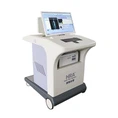

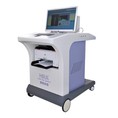
In recent years, the concept of sub - health has gained significant attention as people become more conscious about their well - being. A sub - health analyzer is a device that claims to detect and assess an individual's sub - health status. As a supplier of sub - health analyzers, I often face the question: Is a sub - health analyzer accurate? This blog aims to delve into this topic from a scientific perspective.
Understanding Sub - health
Before discussing the accuracy of sub - health analyzers, it is essential to understand what sub - health is. Sub - health refers to a state between health and disease, where individuals may experience various discomfort symptoms such as fatigue, insomnia, and poor appetite, but do not show obvious pathological changes in traditional medical examinations. It is a gray area that is often overlooked but can have a significant impact on people's quality of life.
How Sub - health Analyzers Work
Sub - health analyzers typically use a variety of technologies to assess the body's condition. Some analyzers use bioelectrical impedance analysis (BIA), which measures the body's electrical resistance to estimate body composition, including fat mass, muscle mass, and water content. Others may use spectral analysis, infrared detection, or other non - invasive techniques to gather information about the body's internal organs and systems.
For example, some sub - health analyzers claim to detect the body's energy levels, the balance of body fluids, and the function of various organs by analyzing the bioelectrical signals emitted by the body. These signals are then processed by a computer algorithm to generate a report on the individual's sub - health status.
Factors Affecting the Accuracy of Sub - health Analyzers
Technological Limitations
Although the technology behind sub - health analyzers has advanced significantly, there are still some limitations. For instance, bioelectrical impedance analysis can be affected by factors such as hydration status, body temperature, and the presence of metal objects on the body. If a person has consumed a large amount of water before the test, the results of BIA may show a higher water content than actual, leading to inaccurate estimates of body composition.
Moreover, the algorithms used in sub - health analyzers are based on certain assumptions and models. These models may not fully capture the complexity of the human body, especially in the case of sub - health, which is a relatively new and poorly understood concept. As a result, the accuracy of the analysis may be compromised.
Operator Skills and Experience
The accuracy of sub - health analyzers also depends on the skills and experience of the operators. A well - trained operator can ensure that the test is conducted correctly, the data is collected accurately, and the results are interpreted appropriately. On the other hand, an inexperienced operator may make mistakes during the testing process, such as improper electrode placement or incorrect calibration of the device, which can lead to inaccurate results.


Individual Variations
Each person's body is unique, and there are significant individual variations in terms of body composition, physiological functions, and genetic factors. These variations can make it challenging to develop a one - size - fits - all sub - health analyzer. For example, a sub - health analyzer that is calibrated for a general population may not be as accurate for individuals with specific medical conditions or genetic predispositions.
Evidence of Accuracy
Despite the above - mentioned challenges, there is some evidence to suggest that sub - health analyzers can provide valuable information. Some studies have shown that bioelectrical impedance analysis can be a useful tool for monitoring changes in body composition over time, especially in the context of weight management and fitness programs.
In addition, some sub - health analyzers have been used in clinical settings to assist in the early detection of certain diseases. For example, some devices can detect subtle changes in the body's physiological parameters that may indicate the onset of cardiovascular diseases or metabolic disorders. However, it is important to note that these devices are usually used as a supplementary tool rather than a definitive diagnostic method.
Our Company's Approach to Ensuring Accuracy
As a supplier of sub - health analyzers, we are committed to ensuring the accuracy of our products. We invest heavily in research and development to improve the technology behind our analyzers. Our products, such as the Full Body Check - Up Machine, Disease Diagnosis Equipment, and Full Body Health Analyzer Machine, are designed with the latest technologies and are rigorously tested before being released to the market.
We also provide comprehensive training to our customers on how to use the analyzers correctly. Our training programs cover topics such as device operation, data collection, and result interpretation. By ensuring that our customers are well - trained, we can minimize the impact of operator error on the accuracy of the test results.
In addition, we continuously collect feedback from our customers and conduct clinical studies to evaluate the performance of our analyzers. Based on the results of these studies, we make necessary improvements to our products to enhance their accuracy and reliability.
Conclusion
In conclusion, the accuracy of sub - health analyzers is a complex issue. While there are some technological limitations and challenges associated with these devices, they can still provide valuable information about an individual's sub - health status. With proper use and interpretation, sub - health analyzers can be a useful tool for promoting health and preventing diseases.
If you are interested in purchasing our high - quality sub - health analyzers or would like to learn more about our products, please feel free to contact us for further discussion. We are looking forward to establishing a long - term business relationship with you and helping you improve the health management of your customers.
References
- World Health Organization. (2020). Definition and concept of health.
- National Institutes of Health. (2019). Bioelectrical impedance analysis: Principles and applications.
- Journal of Sub - health Research. (2018 - 2022). Various studies on sub - health assessment technologies.