


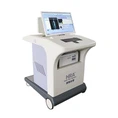

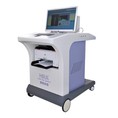
When it comes to full body check - up machines, one aspect that often goes unnoticed but is crucial for both patients and medical staff is the noise level. As a supplier of full body check - up machines, I understand the significance of this factor and its impact on the overall user experience.
The Importance of Noise Level in Full Body Check - up Machines
In a medical setting, a quiet environment is essential. For patients, a noisy machine can cause unnecessary stress and anxiety, which may even affect the accuracy of the examination results. For example, if a patient is constantly distracted by a loud - running machine during an electrocardiogram (ECG) or an ultrasound scan, their body may be in a state of unease, leading to abnormal physiological responses.
Medical staff also benefit from a quiet working environment. They need to focus on operating the machines, interpreting results, and communicating with patients. Excessive noise can make it difficult for them to concentrate, potentially leading to errors in diagnosis or treatment. Moreover, long - term exposure to high - level noise can cause hearing damage to medical staff, which is a serious occupational hazard.
Factors Affecting the Noise Level of Full Body Check - up Machines
There are several factors that contribute to the noise level of full body check - up machines. Firstly, the internal components of the machine play a significant role. Motors, pumps, and fans are common sources of noise. For instance, in an MRI (Magnetic Resonance Imaging) machine, the gradient coils generate a loud knocking sound during operation. These coils are responsible for creating the magnetic field gradients necessary for image formation. The rapid switching of these gradients produces intense mechanical vibrations, which in turn generate noise.
Secondly, the design and construction of the machine can affect noise levels. A well - designed machine with proper insulation and vibration - damping materials can significantly reduce noise. For example, some modern ultrasound machines are designed with advanced acoustic insulation to minimize the noise generated by the transducer and internal electronics.
The operating mode of the machine also matters. Different functions or procedures may require different levels of power consumption and mechanical movement, resulting in varying noise levels. For example, a CT (Computed Tomography) scanner may produce more noise during a high - resolution scan than during a low - dose screening scan because more power is needed to generate a clearer image.
Measuring the Noise Level of Full Body Check - up Machines
The noise level of full body check - up machines is typically measured in decibels (dB). A decibel is a logarithmic unit that expresses the ratio of a sound's intensity to a reference intensity. In a medical environment, the acceptable noise level for most full body check - up machines is generally between 40 - 60 dB, which is similar to the noise level in a quiet office or a library.
To measure the noise level of a machine accurately, specialized sound level meters are used. These meters are placed at specific locations around the machine, usually at the patient's ear level and at the operator's position. Multiple measurements are taken during different stages of the machine's operation to get a comprehensive understanding of its noise characteristics.
Our Company's Approach to Noise Reduction
As a supplier of full body check - up machines, we are committed to providing products with low noise levels. We invest heavily in research and development to improve the design and technology of our machines. For example, we use advanced motor control algorithms to reduce the vibration and noise generated by motors. Our engineers also focus on optimizing the layout of internal components to minimize the interference between different parts, which can reduce noise.


In addition, we use high - quality insulation materials to absorb and dampen noise. These materials are carefully selected to ensure they do not interfere with the machine's performance. For example, in our Health Check - up Machine, we have incorporated special acoustic insulation around the power supply unit and the main processing board to reduce the noise transmitted to the outside.
We also conduct strict noise testing during the production process. Every machine undergoes a series of noise level measurements before it leaves the factory. If the noise level exceeds the acceptable standard, the machine will be sent back for further improvement.
Comparing Our Machines with Competitors
When comparing our full body check - up machines with those of our competitors, the noise level is one of the key advantages. Many of our competitors' machines generate noise levels above 60 dB, which can be quite disturbing for patients and medical staff. In contrast, our machines are designed to operate quietly, with noise levels typically below 50 dB.
For example, our Physical Examination Instruments are known for their low - noise performance. The careful design and use of advanced noise - reduction technologies make them stand out in the market. Our Health Risk Appraisal System also operates quietly, allowing patients to relax during the examination process.
The Impact of Low - Noise Machines on the Market
The demand for low - noise full body check - up machines is increasing in the market. Hospitals and clinics are becoming more aware of the importance of providing a quiet and comfortable environment for patients. Low - noise machines not only improve the patient experience but also enhance the efficiency of medical staff.
Our low - noise machines have received positive feedback from our customers. Many hospitals and clinics have reported that patients are more satisfied with the examination process, and medical staff can work more effectively. This has led to an increase in our market share and a good reputation in the industry.
Conclusion
The noise level of full body check - up machines is an important factor that affects both patients and medical staff. As a supplier, we understand the significance of providing low - noise machines. Through continuous research and development, we are able to offer products with excellent noise - reduction performance.
If you are interested in our full body check - up machines or would like to discuss a potential purchase, please feel free to contact us. We are always ready to provide you with detailed product information and professional solutions.
References
- "Medical Device Noise Standards and Guidelines" - Published by the International Electrotechnical Commission (IEC).
- "Noise Reduction Techniques in Medical Equipment Design" - A research paper from the Journal of Medical Engineering and Technology.
- "The Impact of Noise on Patient Experience in Medical Examinations" - A study by the World Health Organization (WHO).