


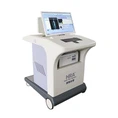

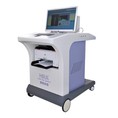
In the realm of medical diagnostics, red blood cell detectors play a crucial role in assessing a patient's health status. As a trusted supplier of Red Blood Cell Detector, I am often asked about the principle behind these remarkable devices. In this blog post, I will delve into the science behind red blood cell detectors, exploring the key concepts and technologies that enable accurate and reliable blood cell analysis.
Understanding Red Blood Cells
Before we dive into the principle of red blood cell detectors, it's essential to understand the significance of red blood cells (RBCs) in the human body. RBCs, also known as erythrocytes, are the most abundant cells in the blood. Their primary function is to transport oxygen from the lungs to the body's tissues and carry carbon dioxide, a waste product, back to the lungs for exhalation.
The health and functionality of RBCs can provide valuable insights into a patient's overall health. Abnormalities in the number, size, shape, or hemoglobin content of RBCs can indicate various medical conditions, including anemia, infections, and genetic disorders. Red blood cell detectors are designed to analyze these parameters accurately, helping healthcare professionals make informed diagnostic and treatment decisions.
The Principle of Red Blood Cell Detection
Red blood cell detectors employ various techniques to analyze blood samples and provide detailed information about RBCs. The most common methods include impedance-based counting, optical detection, and flow cytometry. Let's explore each of these techniques in detail.
Impedance-Based Counting
Impedance-based counting, also known as the Coulter principle, is one of the oldest and most widely used methods for counting and sizing blood cells. This technique is based on the principle that cells are poor conductors of electricity compared to the surrounding electrolyte solution.
When a blood sample is diluted in an electrolyte solution and passed through a small aperture, each cell causes a temporary change in the electrical resistance across the aperture. This change in resistance, or impedance, is proportional to the volume of the cell. By measuring the magnitude and frequency of these impedance pulses, the detector can count the number of cells and determine their size distribution.
The impedance-based counting method is relatively simple, fast, and cost-effective. It can accurately count and size RBCs, as well as other blood cells such as white blood cells and platelets. However, this method has some limitations. It cannot distinguish between different types of cells based on their morphological features, and it may be affected by factors such as cell clumping and debris in the blood sample.
Optical Detection
Optical detection methods use light to analyze blood cells. There are several types of optical detection techniques, including light scattering, absorbance, and fluorescence.
Light Scattering: Light scattering occurs when a beam of light interacts with a cell. The scattered light is detected at different angles, and the intensity and pattern of the scattered light provide information about the cell's size, shape, and internal structure. For example, forward scatter (FSC) is related to the cell's size, while side scatter (SSC) is related to the cell's granularity or internal complexity.
Absorbance: Absorbance is the measure of the amount of light absorbed by a sample. In the context of red blood cell detection, absorbance can be used to measure the hemoglobin content of RBCs. Hemoglobin absorbs light at specific wavelengths, and by measuring the absorbance at these wavelengths, the detector can determine the hemoglobin concentration in the blood sample.


Fluorescence: Fluorescence is a phenomenon in which a molecule absorbs light at one wavelength and emits light at a longer wavelength. Fluorescent dyes can be used to label specific components of blood cells, such as DNA or cell surface markers. By detecting the fluorescence emitted by the labeled cells, the detector can identify and analyze different types of cells.
Optical detection methods offer several advantages over impedance-based counting. They can provide more detailed information about the morphological and biochemical characteristics of blood cells, and they can distinguish between different types of cells. However, optical detection methods are generally more complex and expensive than impedance-based counting, and they may require specialized equipment and reagents.
Flow Cytometry
Flow cytometry is a powerful technique that combines the principles of optical detection and fluidics to analyze individual cells in a flowing stream. In a flow cytometer, a blood sample is diluted and injected into a narrow stream of fluid, known as the sheath fluid. The cells are then hydrodynamically focused into a single file and passed through a laser beam.
As each cell passes through the laser beam, it scatters light and emits fluorescence, which is detected by a series of detectors. The signals from the detectors are processed by a computer, which analyzes the data and provides information about the cell's size, shape, and biochemical characteristics.
Flow cytometry can analyze a large number of cells in a short period of time, making it a valuable tool for high-throughput screening and research. It can also provide detailed information about the different subpopulations of cells in a blood sample, such as T cells, B cells, and monocytes. However, flow cytometry is a complex and expensive technique that requires specialized training and expertise.
Factors Affecting Red Blood Cell Detection
Several factors can affect the accuracy and reliability of red blood cell detection. These factors include the quality of the blood sample, the calibration of the detector, and the presence of interfering substances in the blood.
Blood Sample Quality: The quality of the blood sample is crucial for accurate red blood cell detection. The sample should be collected using proper techniques to avoid contamination and hemolysis (the breakdown of red blood cells). The sample should also be analyzed within a certain time frame to prevent changes in the cell morphology and characteristics.
Detector Calibration: Regular calibration of the red blood cell detector is essential to ensure accurate and consistent results. Calibration involves using a known standard sample to adjust the detector's settings and ensure that it is measuring the cells correctly. Failure to calibrate the detector properly can lead to inaccurate results and misdiagnosis.
Interfering Substances: The presence of interfering substances in the blood, such as lipids, proteins, and medications, can affect the accuracy of red blood cell detection. These substances can cause false signals or interfere with the detection of cells. It is important to take these factors into account when interpreting the results of a red blood cell analysis.
Applications of Red Blood Cell Detectors
Red blood cell detectors are widely used in various clinical and research settings. Some of the key applications of these devices include:
Clinical Diagnosis: Red blood cell detectors are an essential tool for diagnosing and monitoring various medical conditions, such as anemia, polycythemia (an abnormal increase in the number of red blood cells), and blood disorders. By analyzing the number, size, shape, and hemoglobin content of RBCs, healthcare professionals can identify the underlying cause of the condition and develop an appropriate treatment plan.
Blood Donation Screening: Red blood cell detectors are used to screen blood donors for various infectious diseases and blood disorders. By analyzing the donor's blood sample, the detector can identify any abnormalities or potential health risks, ensuring the safety of the donated blood.
Research and Development: Red blood cell detectors are used in research laboratories to study the biology and function of red blood cells. These devices can provide valuable insights into the mechanisms of blood cell production, differentiation, and function, as well as the development of new treatments for blood disorders.
Conclusion
In conclusion, red blood cell detectors are sophisticated devices that play a vital role in medical diagnostics and research. By employing various techniques such as impedance-based counting, optical detection, and flow cytometry, these detectors can accurately analyze blood samples and provide detailed information about red blood cells.
As a supplier of Red Blood Cell Detector, we are committed to providing high-quality products and services to our customers. Our detectors are designed to be accurate, reliable, and easy to use, making them an ideal choice for healthcare professionals and researchers.
If you are interested in learning more about our red blood cell detectors or would like to discuss your specific requirements, please do not hesitate to contact us. We look forward to the opportunity to work with you and help you meet your blood cell analysis needs.
References
- Bauer, M. (2018). Hematology: Clinical Principles and Applications. Elsevier.
- Jaffe, E. S., Arber, D. A., Campo, E., Harris, N. L., & Stein, H. (2017). Hematopathology. Elsevier.
- Tietz, N. W. (2015). Fundamentals of Clinical Chemistry. Elsevier.