


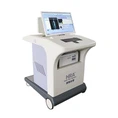

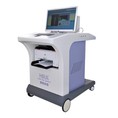
As a supplier of microcirculation therapy devices, I am often asked about the technical parameters of these devices. Understanding these parameters is crucial for both medical professionals and consumers who are interested in using such devices for improving microcirculation. In this blog post, I will delve into the key technical parameters of a microcirculation therapy device, providing you with the information you need to make an informed decision.
1. Output Frequency
The output frequency of a microcirculation therapy device refers to the number of cycles of the electrical or electromagnetic wave it generates per second, measured in Hertz (Hz). Different frequencies have different effects on the human body. Low - frequency waves, typically in the range of 1 - 100 Hz, can stimulate nerve endings, causing muscle contractions and promoting blood flow through mechanical stimulation. Medium - frequency waves (100 Hz - 10 kHz) are often used for deeper tissue penetration and can help in improving local blood circulation by dilating blood vessels. High - frequency waves (above 10 kHz) are mainly used for generating heat, which can also enhance microcirculation by increasing the metabolic rate of cells.
Our Microcirculation Therapy Device offers a wide range of adjustable output frequencies, allowing users to customize the treatment according to their specific needs. Whether it is for mild microcirculation improvement or more targeted therapy, the adjustable frequency feature ensures optimal results.


2. Output Intensity
Output intensity is another important parameter. It represents the strength of the electrical or electromagnetic field generated by the device. Measured in units such as milliamperes (mA) for electrical current or gauss for magnetic fields, the output intensity determines the depth and degree of the therapeutic effect.
Too low an intensity may not produce a significant therapeutic effect, while too high an intensity can cause discomfort or even harm to the body. Our device has a precise intensity control system. It can start from a very low intensity, suitable for patients with sensitive skin or mild conditions, and gradually increase to a higher intensity for more severe microcirculation disorders. This adjustable intensity feature ensures that the treatment is both safe and effective.
3. Waveform
The waveform of the output signal is also a critical technical parameter. Common waveforms include sine waves, square waves, triangular waves, and pulsed waves. Each waveform has its own characteristics and effects.
Sine waves are smooth and continuous, which are gentle on the body and are often used for general microcirculation improvement. Square waves have a sharp rise and fall, which can generate a more intense and sudden stimulation, suitable for stronger muscle contractions and more targeted therapy. Triangular waves have a gradual change in amplitude, providing a more moderate and progressive stimulation. Pulsed waves consist of a series of short - duration pulses, which can be used to simulate natural nerve impulses and are effective in promoting blood circulation and reducing pain.
Our Microcirculation Disorder Device can generate multiple waveforms, giving users the flexibility to choose the most appropriate waveform according to the specific condition and treatment requirements.
4. Treatment Time
The treatment time is an important consideration. It refers to the duration of each treatment session. The appropriate treatment time depends on various factors, such as the patient's condition, the output frequency, and intensity used.
Generally, a single treatment session can range from 10 to 60 minutes. For mild microcirculation problems, shorter treatment times may be sufficient, while for more severe cases, longer treatment times may be required. Our device allows users to set the treatment time according to their needs, with a clear display and easy - to - use control panel.
5. Safety Features
Safety is of utmost importance when it comes to medical devices. Our microcirculation therapy device is equipped with multiple safety features.
Over - current protection is one of the key safety mechanisms. It automatically cuts off the power supply when the output current exceeds a safe level, preventing potential harm to the user. Temperature control is also essential, especially for devices that generate heat. Our device has a built - in temperature sensor that monitors the temperature in real - time and adjusts the output to ensure that the treatment area does not overheat.
In addition, the device has a short - circuit protection function. If a short - circuit occurs in the circuit, the device will immediately stop working to avoid any electrical hazards.
6. Display and Control Interface
A user - friendly display and control interface is essential for easy operation. Our device features a clear LCD display that shows important information such as output frequency, intensity, waveform, and treatment time.
The control panel is designed with intuitive buttons, allowing users to easily adjust the parameters. Whether you are a medical professional or a consumer using the device at home, you can quickly and accurately set the desired treatment parameters without any complicated procedures.
7. Portability and Size
Portability is an important factor, especially for users who need to use the device on - the - go or in different locations. Our microcirculation therapy device is compact and lightweight. It can be easily carried in a bag, making it convenient for home use, travel, or even use in a medical clinic.
The small size does not compromise its performance. Despite its compact design, it still offers all the advanced features and technical parameters mentioned above, ensuring high - quality microcirculation therapy wherever you are.
8. Power Supply
The power supply of the device is also a consideration. Our device can be powered by both AC power (using a standard electrical outlet) and DC power (such as a rechargeable battery).
The AC power option provides a continuous and stable power source, suitable for long - term use in a fixed location. The DC power option, on the other hand, offers greater flexibility, allowing you to use the device even when there is no access to an electrical outlet. This dual - power supply feature makes our device more versatile and convenient for different usage scenarios.
Conclusion
In conclusion, the technical parameters of a microcirculation therapy device play a crucial role in determining its effectiveness and safety. Our microcirculation therapy devices are designed with advanced technology and precise control systems to ensure optimal performance. With adjustable output frequency, intensity, waveform, and treatment time, along with multiple safety features, user - friendly interface, portability, and dual - power supply options, our devices are suitable for a wide range of users and conditions.
If you are interested in our microcirculation therapy devices or have any questions about the technical parameters, please feel free to contact us for procurement and further discussion. We are committed to providing you with the best products and services to improve microcirculation and enhance your health.
References
- Guyton, A. C., & Hall, J. E. (2006). Textbook of Medical Physiology. Elsevier Saunders.
- Kandel, E. R., Schwartz, J. H., & Jessell, T. M. (2000). Principles of Neural Science. McGraw - Hill.
- Webster, J. G. (1998). Medical Instrumentation: Application and Design. Wiley.