



Hey there! As a supplier of red blood cell detectors, I often get asked about the size of a typical red blood cell detector. It's a pretty common question, and understandably so. After all, size can matter in a lot of ways when it comes to medical devices. So, let's dive right into it and break down what you need to know.
First off, it's important to understand that there isn't a one - size - fits - all answer. Red blood cell detectors come in a variety of sizes, and this variation is mainly due to different design purposes, technological approaches, and intended use cases.


Desktop Red Blood Cell Detectors
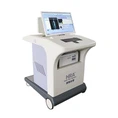
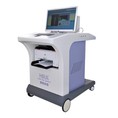
The larger ones are usually desktop models. These are often found in big hospitals and well - equipped medical laboratories. They're designed to handle a high volume of blood samples on a daily basis. You know, in a busy hospital, they might have hundreds of patients coming in for blood tests every day. These desktop detectors are built to keep up with that kind of demand.
Typically, a desktop red blood cell detector can be around the size of a small printer or even a bit larger. They might measure about 30 to 60 centimeters in length, 20 to 40 centimeters in width, and 20 to 50 centimeters in height. This size allows for the integration of complex detection mechanisms, multiple sample handling systems, and large - capacity data storage units.
The reason for their relatively large size is that they need to house advanced optical or electrical detection components. For example, some use laser - based technology to analyze the red blood cells. The laser source, the optical lenses, and the light - detection sensors all need a certain amount of space to work accurately. Also, they have big sample trays that can hold multiple blood samples at once, which speeds up the testing process.
These desktop detectors are great for places where accuracy and high - throughput testing are the top priorities. They can perform a wide range of tests on red blood cells, like counting the number of cells, measuring their size distribution, and even analyzing their shape. If you're interested in a high - end Red Blood Cell Detector for your large - scale medical facility, these are definitely worth considering.
Portable Red Blood Cell Detectors
On the other end of the spectrum, we have portable red blood cell detectors. These are a game - changer in the medical field, especially for point - of - care testing. Portable detectors are much smaller, often no bigger than a smartphone or a small tablet. They can be as small as 10 to 20 centimeters in length, 5 to 15 centimeters in width, and 1 to 5 centimeters in thickness.
The main advantage of these portable devices is their mobility. They're perfect for use in remote areas, ambulances, or even in a doctor's office for quick on - the - spot testing. A doctor can carry one around easily and get immediate results when examining a patient.
Despite their small size, portable red blood cell detectors are still quite powerful. They use miniaturized detection technologies, such as microfluidic chips. These chips are like tiny laboratories on a chip. They can manipulate and analyze small volumes of blood samples. The sample is usually just a drop of blood, which is much more convenient for the patient.
Portable detectors might not be able to perform as many complex tests as the desktop models, but they can still provide essential information about red blood cells, like the basic cell count. They're also a lot quicker, giving results in just a few minutes. If you're looking for a Blood Test Device that you can take with you anywhere, a portable red blood cell detector is the way to go.
Handheld Red Blood Cell Detectors
There's also a category in between, which is handheld red blood cell detectors. These are a bit larger than portable ones but still small enough to be held in one hand. They're usually around 15 to 30 centimeters in length, 8 to 20 centimeters in width, and 3 to 10 centimeters in thickness.
Handheld detectors are a good compromise between the high - performance desktop models and the ultra - portable ones. They offer more features than portable detectors while still being relatively easy to carry around. They can be used in clinics or small medical centers where the sample volume isn't as high as in a big hospital but where more advanced testing capabilities are needed compared to a simple portable device.
These detectors often have a touch - screen interface, which makes them user - friendly. They can store a reasonable amount of data and can be connected to other devices, like computers, for further analysis. If you're running a medium - sized medical practice and need a flexible Blood Test Device, a handheld red blood cell detector could be the ideal choice.
Factors Affecting the Size
Now, let's talk about what factors actually influence the size of these red blood cell detectors.
Technology is a major factor. As I mentioned earlier, more advanced technologies usually require more space. For example, detectors that use flow cytometry technology need a larger housing to accommodate the fluidic system, the laser, and the detection electronics. On the other hand, simpler technologies, like some electrochemical - based methods, can be miniaturized more easily.
Functionality also plays a role. Detectors that can perform multiple tests on red blood cells, such as measuring different parameters like hemoglobin content, hematocrit, and cell morphology, will generally be larger. This is because they need more components to carry out these different functions.
Cost is another consideration. Larger detectors with more advanced features tend to be more expensive. The materials used in the construction, the complexity of the manufacturing process, and the cost of the detection components all contribute to the overall price. So, if you're on a tight budget, you might have to settle for a smaller, less feature - rich detector.
Conclusion
So, to sum it up, the size of a typical red blood cell detector can vary widely, from smartphone - sized portable devices to printer - sized desktop models. Each size has its own advantages and is suitable for different medical settings. Whether you need a high - throughput desktop detector for a large hospital, a portable one for remote testing, or a handheld device for a medium - sized clinic, there's an option out there for you.
If you're in the market for a red blood cell detector, I'd love to have a chat with you about your specific needs. We can discuss which size and type of detector would be the best fit for your medical facility. Feel free to reach out, and let's start a conversation about how we can help you with your red blood cell testing requirements.
References
- Principles of Biomedical Instrumentation, John G. Webster
- Medical Device Design and Development, Randall C. Lee